The primary purpose of the Private Well Pesticide Sampling (PWPS) Project is to provide information to homeowners on the presence of pesticides in their drinking water and is paid for with the Clean Water Fund. Data collected also supports MDA’s pesticide management decisions by identifying where and how pesticides are affecting private wells. In addition, the information is used to evaluate the relationship between pesticide and nitrate in areas vulnerable to groundwater contamination from agricultural activities.
The PWPS project has been through an evolution of scope which has gone from a wide list of pesticides to a narrower focus of pesticides that pose the greatest health risk to private well users. The phased approach is discussed in the following sections and detailed in summary reports.
Phase 1 Monitoring
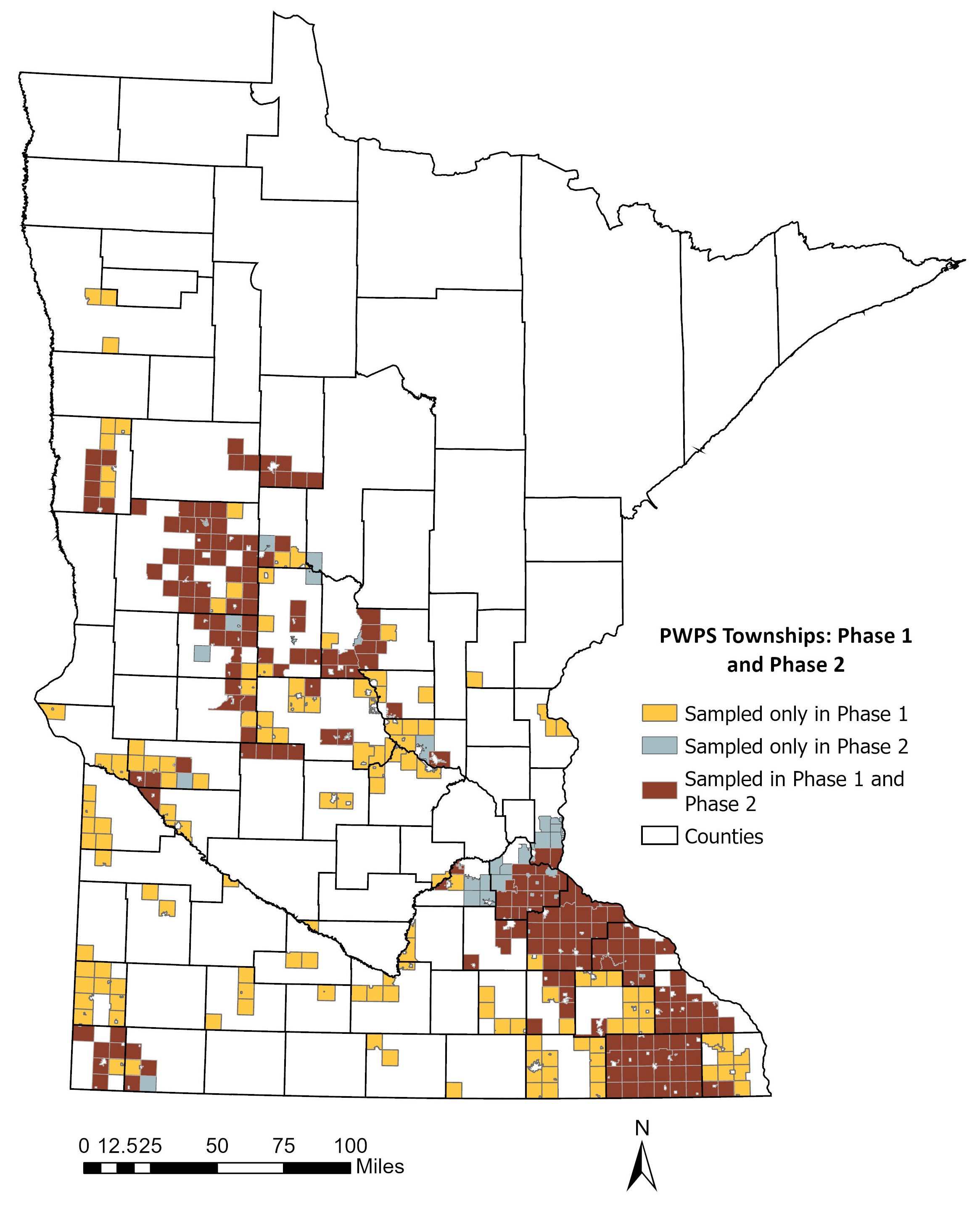
During Phase 1, homeowners that had a nitrate detection as part of the Township Testing Program were offered nitrate and pesticide testing by MDA staff for up to 133 pesticide chemicals, at no cost to the homeowner. From 2016 through spring 2021, the MDA sampled 5,700 wells in vulnerable agricultural areas across 50 counties for nitrate and pesticides. Pesticides and/or pesticide degradates were detected at a concentration above a drinking water reference value in approximately 1% of the wells (65 wells). While 76% of the wells sampled had a pesticide or pesticide degradate(s) detected, most detections were at low concentrations in comparison to reference values. This detection frequency represents a monitoring strategy that targeted the most vulnerable wells in agricultural areas.
All testing results were shared directly with homeowners. Additional reports can be found on the PWPS Results and Work Plans page.
Phase 2 Monitoring
Based off the findings in Phase 1, the primary purpose of the PWPS Project Phase 2 monitoring effort was to provide information to well owners regarding the presence of total cyanazine in their drinking water. Total cyanazine includes the parent compounds of cyanazine and atrazine, as well as some of their known degradates, including: cyanazine acid, cyanazine amide, deethylcyanazine, deethylcyanazine acid, deethylcyanazine amide, deisopropylatrazine, and didealkylatrazine. Desethylatrazine and hydroxyatrazine, which are degradates of atrazine, are also included.
Beginning in the summer of 2021, Phase 2 of the PWPS Project focused on revisiting areas previously tested between 2016-2018 to test for cyanazine degradates that weren't included in the sample list prior to 2019. From 2019 to 2023 approximately 3,900 wells were sampled and 4% were over the HRL for total cyanazine.
The 2024 and spring 2025 MDA efforts were used two sample collection approaches:
- Hotspot Sampling – Expanded sample collection in areas of Dakota, Goodhue, Scott, and Washington Counties with previous exceedances of total cyanazine over the HRL of 1,000 ng/L, as well as nearby areas with vulnerable geology and historic agricultural land use.
- Long-Term Sampling - To assess how concentrations are changing over time, the MDA sampled wells that had a total cyanazine concentration over 1,000 ng/L, on a three-year reoccurring basis,
All testing results were shared directly with homeowners. Additional reports can be found on the PWPS Results and Work Plans page.
Phase 3 Monitoring
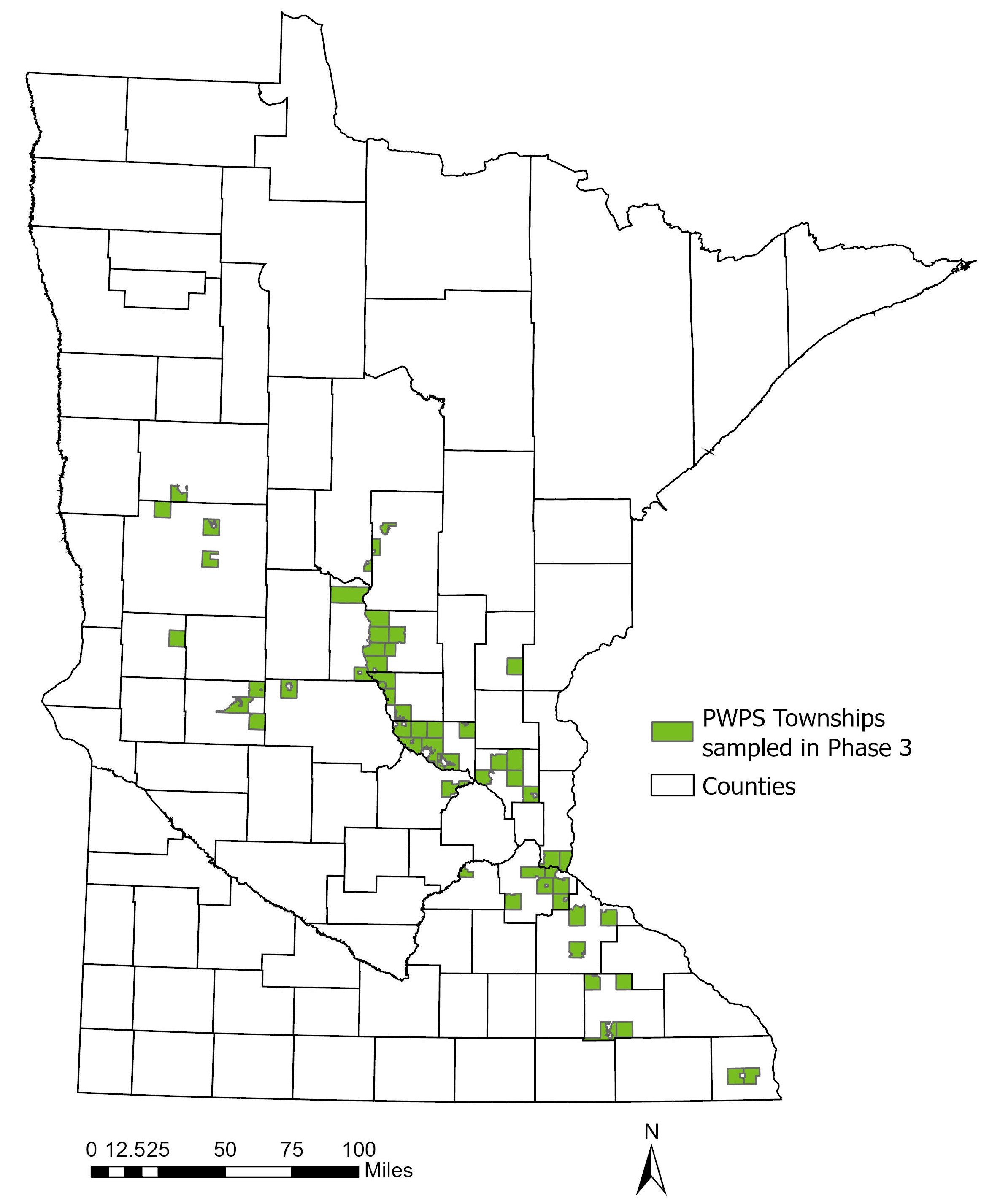
In the fall of 2025, the MDA continued to sample vulnerable private wells in the state, with the focus on total cyanazine (cyanazine plus the degradates of cyanazine) and 4-hydroxychlorothalonil (4-HDC) as the most likely pesticide compounds to be found above drinking water reference values. Additionally, a subset of wells monitored for 4-HDC were also analyzed for 2 neonicotinoid insecticide compounds, clothianidin and imidacloprid. In 2026, thiamethoxam (a neonicotinoid) will also be added to the analyte list.
Total cyanazine (cyanazine and atrazine and their known degradates).
The degradates of cyanazine were identified as the pesticide-related compounds that posed the greatest risk to drinking water, based on sampling performed in Phase 1, along with expanded areas of detections above the drinking water reference value in Phase 2. Cyanazine has not been used on crops since 2002, so it is typically only found in areas with older groundwater.
4-HDC (fungicide degradate)
The MDA has detected 4-HDC above the drinking water reference value in multiple shallow ambient monitoring wells and in private drinking water wells in central Minnesota. 4-HDC is a degradate of chlorothalonil which is a fungicide typically used on potato fields and turf grass in Minnesota.
Neonicotinoid insecticides
Three neonicotinoid insecticides, clothianidin, imidacloprid, and thiamethoxam, have been detected in the MDA’s ambient monitoring network, with the majority of the detections in central Minnesota. Clothianidin was the most widely detected parent pesticide in the MDA’s ambient monitoring network in 2024. However, concentrations of these neonicotinoids are typically found at levels below drinking water reference values. The neonicotinoids are included when sampling for 4-HDC in central Minnesota.
Additional pesticides may be added based on evaluation of risk, availability of testing, and further information gained through the MDA ambient groundwater monitoring program.