
-
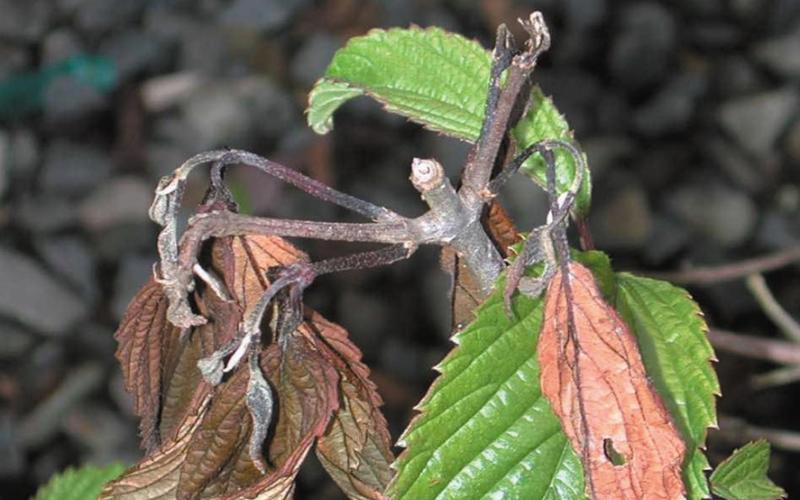 Ramorum shoot dieback and leaf blight on Viburnum x bodnantense ‘Dawn’. Photo by Jennifer Parke, 2003.
 -
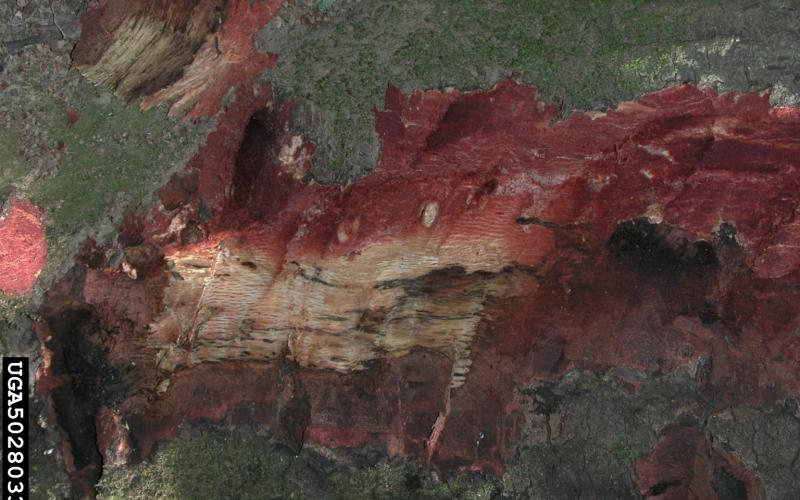 Removing bark of a P. ramorum infected oak reveals reddish brown discoloration of wood. Photo by Bruce Moltzan, USDA Forest Service, Bugwood.org.
 -
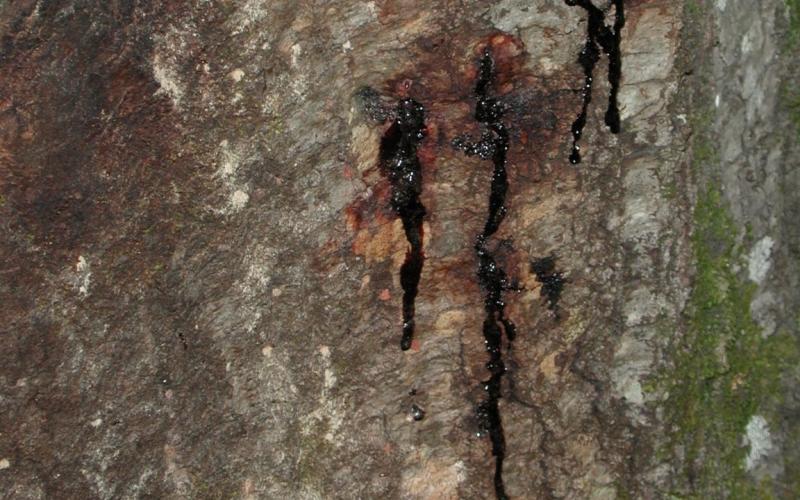 Infection by P. ramorum in oak trees causes a “bleeding” canker in which the wood and bark turn reddish brown, and red liquid seeps from cracks in the bark. Photo by Bruce Moltzan, USDA Forest Service, Bugwood.org.
 -
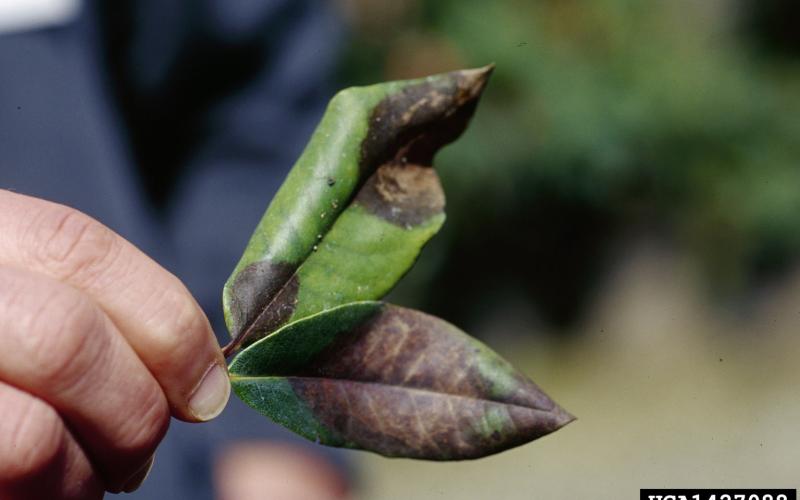 Symptoms of P. ramorum on the upper surface of a rhododendron leaf. Photo by Joseph OBrien, USDA Forest Service, Bugwood.org.
Scientific name: Phytophthora ramorum
Native range: Southeast Asia and southwestern Japan
At Risk
Phytophthora ramorum infects a wide variety of trees and shrubs and a few perennial landscape plants. This pathogen causes two distinct types of disease. Many popular nursery and landscape shrubs, including rhododendron, viburnum, and lilac, develop leaf blotches, brown leaf edges, and shoot dieback. This disease is known as ramorum blight, and it rarely kills the infected plant.
Some oak species develop a stem canker that girdles and kills the tree, leading to rapid wilting, browning, and death of the canopy. This disease is known as sudden oak death and has killed over 40 million trees in California and Oregon. It is unknown if P. ramorum would cause the same symptoms in oak species common in Minnesota.
A 2023 United States Department of Agriculture (USDA) risk assessment found that P. ramorum is unlikely to survive and become established in Minnesota.
Distribution
Sudden oak death was first officially reported in California in 2000 and was found in Europe around the same time. Phytophthora ramorum is believed to be native to southeast Asia and southwestern Japan.
In the United States, Phytophthora ramorum occurs in coastal forests and in some plant nurseries in California and Oregon. It had also been detected in several waterways in the southern United States, but it has not spread to surrounding vegetation in these areas.
A 2023 USDA report estimated that P. ramorum had been moved to new areas of the United States over 1,000 times on infected nursery stock. This has resulted in the quarantine and decontamination of nurseries that received infected plant material. Phytophthora ramorum has never become established in natural forests or managed landscapes outside of the coastal pacific northwest.
Biology
Phytophthora ramorum is a water mold that can survive in infected plants, plant debris, soil, and waterways. Spores spread short distances by splashing rain or irrigation water and long distances through infected plants or soil.
Phytophthora ramorum needs cool, wet conditions to infect plants but it can survive cold, hot, and dry conditions by forming tough resting spores. The most likely way that P. ramorum would enter Minnesota is on infected plants.
Phytophthora ramorum thrives in cool, humid climates without extreme heat, cold, or drought. A 2023 USDA risk assessment determined that P. ramorum is unlikely to become established and cause significant disease problems outside the costal Pacific Northwest.
Find more information about Phytophthora ramorum, visit the American Phytopathological Society website.
Identification
Symptoms of infection by P. ramorum differ based on host plant. Many common insect pests and disease cause similar symptoms and are easily confused with P. ramorum infection. A laboratory test is required to confirm the presence of P. ramorum.
Rhododendron and other Ornamental Shrubs
Many commonly grown landscape shrubs are susceptible to Phytophthora ramorum. Common symptoms found on ornamental shrubs include:
- Large brown blotches on leaves
- Wilted leaves with brown edges
- Young green stems and shoots turn brown and shrivel
- Leaves attached to infected stems that wilt and may have a dark brown line running from the base along the center of the leaf
Phytophthora ramorum does not typically kill rhododendrons or other ornamental landscape shrubs.
Oak Trees
In oak trees, Phytophthora ramorum infects the main trunk of mature trees. The infection causes a “bleeding” canker, where wood and bark turn reddish brown and red liquid seeps out from cracks in the bark. The pathogen destroys the tissues that move food and water through the tree.
When most of the trunk is infected, leaves quickly turn brown and the tree dies. These symptoms have been observed on oak species common in California and Oregon. It is unknown if the oak species found in Minnesota show the same symptoms when infected.
Look A Likes
Several common insect and disease problems affect oak trees in Minnesota. These should be considered when diagnosing potential problems:
- Twolined chestnut borer and Armillaria root disease are the most common pests of oak trees in Minnesota. Both are associated with decline of oak trees after drought or outbreaks of leaf feeding insects. Both can cause bleeding on trunks.
- Oak wilt is an invasive and fatal disease of oak trees that occurs in parts of Minnesota.
- Bur oak blight is a common leaf disease in Minnesota, especially after wet springs.
- Other Phytophthora species besides sudden oak death can also impact oaks and other trees in Minnesota.
For help diagnosing problems on oak trees, consult the University of Minnesota “What’s Wrong With my Plant?” website for oaks or submit a sample to the UMN Plant Disease Clinic.
Regulatory Status: Regulated
Phytophthora ramorum is regulated at both the state and federal levels. States with positive sites (locations where P. ramorum has been confirmed), along with the USDA Animal and Plant Health Inspection Service (APHIS) regulate the movement of host nursery stock from currently positive nurseries to prevent the movement of P. ramorum to other areas.
What Can I Do?
Contact the Minnesota Department of Agriculture through the Report a Pest system if you suspect Phytophthora ramorum.
Smarty Plants Podcast
Subscribe to Smarty Plants, the Minnesota Department of Agriculture's podcast that digs into the fascinating world of invasive species. Join expert guests as they share insights and solutions to protect our environment and agricultural resources.
Plant Pest Insider
Subscribe to the Plant Pest Insider, the MDA's monthly newsletter. Receive updates on pest management, new detections, and ways to help protect Minnesota’s plants and environment.

