
 Many agricultural products from other parts of the country enter Minnesota during the holiday season. Examples of these products include Christmas trees, wreaths, boughs, cut vines, shrubs, and plants with colorful fruits and seeds.
To prepare for the holiday season, the Minnesota Department of Agriculture (MDA) inspects material entering the state to look for unwanted hitchhikers. Pests that move through this pathway include elongate hemlock scale, boxwood blight, round leaf bittersweet, spongy moth, brown marmorated stink bug, spotted lantern fly, and Japanese maple scale.
Means of Spread
Invasive insects, pathogens, and weeds can spread through holiday greenery and Christmas trees in several ways. The most common pathways include:
- Improper disposal of holiday greenery and Christmas trees
- Moving firewood and wood products
- Transporting pests in freight, on vehicles, or on recreational equipment
How Can You Help?
- Buying locally grown holiday greenery reduces the risk of spreading invasive pests transported on greenery from out of state.
- Dispose of holiday greenery safely. The best option is to use a curbside tree collection or bring your greenery to a designated drop-off site. Check with your waste hauler, city, or county for local options. The Minnesota Pollution Control Agency provides a map of yard waste compost locations. Contact locations directly to confirm they accept trees and greenery.
- Do not toss trees and greenery into backyard woods or your residential compost pile, which will spread the infestation.
- Wreaths and other decorative greens can be disposed of in trash cans.
- If your city or county does not have an organized pick-up or drop-off, burning may be a last resort. Always check fire danger conditions and burning restrictions before burning and follow local ordinances.
At Risk
Products sold during the holiday season in North America can introduce pests that can affect Minnesota's native plant communities and agricultural commodities. New infestations often begin when infested materials are moved across the country. The economic and environmental impacts can be serious if left unchecked.
Species
Insects and diseases can hitchhike on trees and holiday greenery. Boxwood blight and round leaf bittersweet could be found in holiday greenery and centerpieces. Spongy moth and elongate hemlock scale are typically moved on Christmas trees and wreaths. Click on the species below to learn more about them.
Holiday Greenery Invasive Insects
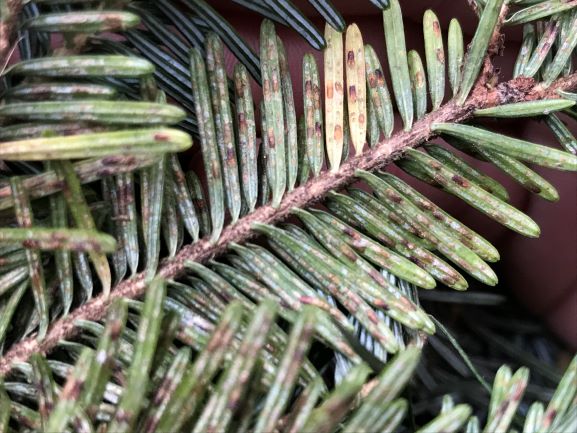
Elongate hemlock scale is found almost exclusively on the underside of conifer needles. Because of its small size and inconspicuous appearance, the elongate hemlock scale may look like dirt or debris to the untrained eye. Elongate hemlock scale has a host range of up to 40 species of conifers and prefers hemlock, fir, and spruce. It has been detected in Minnesota but not in landscape or natural areas.
They can be found hitchhiking on:
- Christmas trees
- Holiday wreaths, bows, and sprays
- Nursery stock
Elongate Hemlock Scale Distribution
Elongate Hemlock Scale Biology
- Christmas trees
- Nursery stock
- Logs and firewood
- Recreation equipment, including campers and lawn chairs
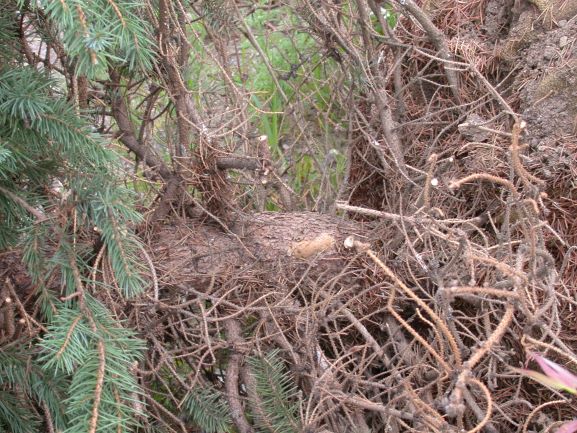
Spotted lanternfly is a primary pest of vineyards and nursery stock, with a host range up to 65 plant species. It has not been found in Minnesota.
It can cling to a wide variety of surfaces and materials, including:
- Christmas trees
- Plants
- Smooth building materials like bricks, stone, and metal
- Vehicles, trailers, and freight
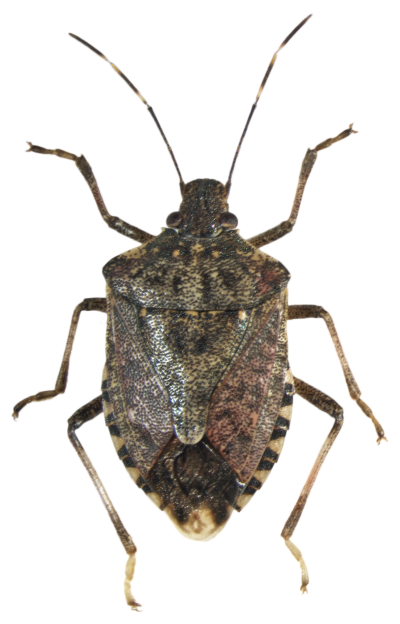
Brown marmorated stink bug (BMSB) is a major pest of fruit trees and vegetables with a wide range of host plants. BMSB overwinters by invading and hitchhiking on manufactured items. It is established in parts of Minnesota.
They are adept at stowing away on:
- Holiday greenery freight
- Freight and cargo containers
- Vehicles and recreation vehicles
Brown Marmorated Stink Bug Distribution
Brown Marmorated Stink Bug Biology
Japanese maple scale has a large host range of mostly trees and shrubs. It has not been found in Minnesota but is widely distributed in the eastern United States.
It can be found hitchhiking on:
- Holiday twigs and sprays of shrubs like dogwood and willow
- Nursery stock
Holiday Greenery Invasive Pathogens
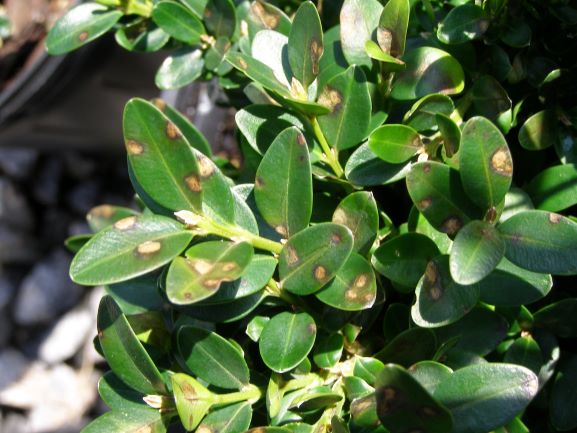
Holiday wreaths, garlands, and planters often contain shoots from boxwood plants. Boxwood is an evergreen shrub with dark green, round leaves. Boxwood blight is caused by the invasive fungus Calonectria pseudonaviculata.
This disease causes leaf spots, stem lesions, and leaf drop in boxwoods. It can spread fast in the landscape, killing nearly all plants affected. It has not been found in Minnesota. This pathogen can:
- Overwinter in plant debris and discarded holiday décor
- Spread to the landscape causing complete collapse of boxwood plants
Boxwood blight is found in more than 25 states including Wisconsin.
Sudden oak death host material is potentially used in holiday décor. Host material includes: evergreen trees, bows, and decorative sprays used in holiday arrangements. Sudden oak death is regulated at the federal and state level with quarantines and has not been found in Minnesota. Common species potentially carrying sudden oak death include:
- Evergreen trees, bows, and decorative splays used in holiday arrangements.
- Fir, Abies
- Witch hazel, Hamamelis
- Rhododendron
- Sweet bay laurel
- Holly
- Magnolia
- Scotch heather
- European beech
- Shallon, or Gaultheria shallon
Holiday Greenery Invasive Weeds
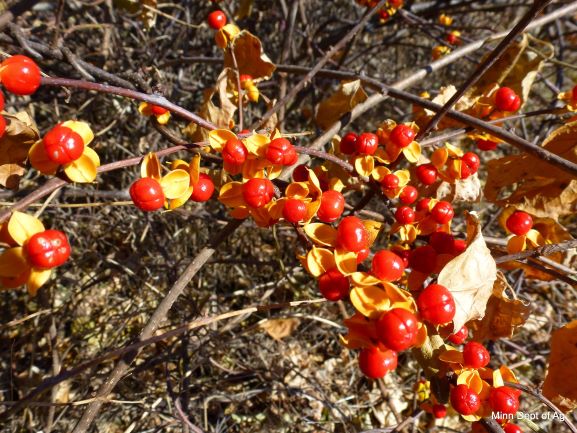
Round leaf bittersweet vines have long been used in holiday decorations and other crafting items. Fruiting branches with red berries and yellow fruit capsules make attractive wreaths but can easily spread seeds. Round leaf bittersweet is a vine that strangles trees as it grows up the tree canopy. It can choke out other woody plants and can take over a forest canopy. It is established in parts of Minnesota and is designated as Prohibited Eradicate on the Minnesota Noxious Weed List.
If wreaths or decorations are placed outdoors, birds may eat the fruit and spread seeds.
It can also spread by:
- Discarded holiday wreaths, bows, and decorations
- Nursery stock
- Birds and other mammals
Round leaf Bittersweet Distribution
Round leaf Bittersweet Biology
Multiflora rose is a noxious weed in many states due to its invasive tendencies. It has been found in Minnesota and is listed as Restricted on the Minnesota Noxious Weed List. It can be spread in:
- Holiday wreaths
- Holiday décor
Smarty Plants Podcast
Subscribe to Smarty Plants, the Minnesota Department of Agriculture's podcast that digs into the fascinating world of invasive species. Join expert guests as they share insights and solutions to protect our environment and agricultural resources.
Plant Pest Insider

Subscribe to the Plant Pest Insider, the MDA's monthly newsletter. Receive updates on pest management, new detections, and ways to help protect Minnesota’s plants and environment.

