
-
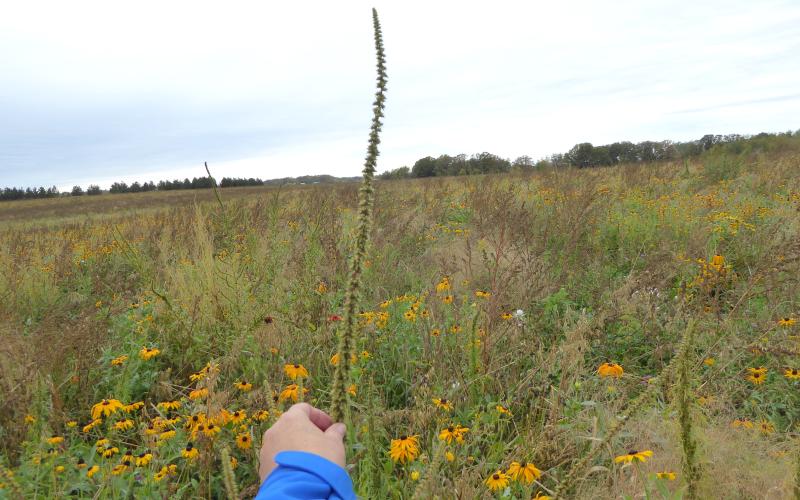 Palmer amaranth flower in a meadow.
 -
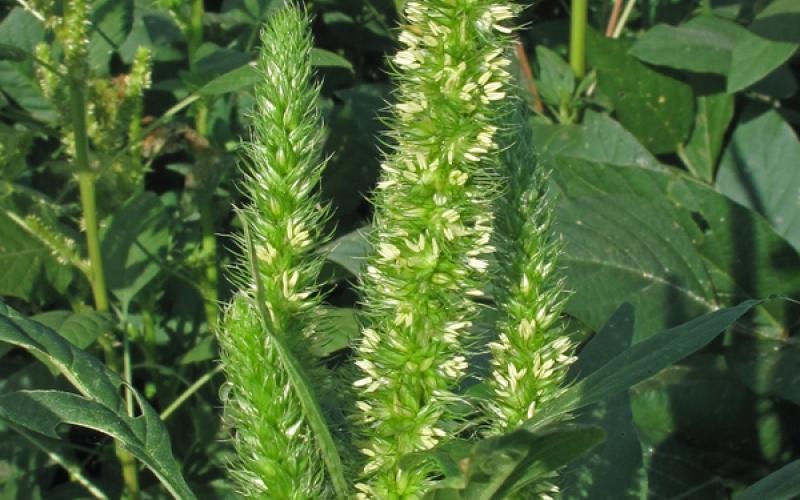 Flowers are long and narrow with small, white flowers.
 -
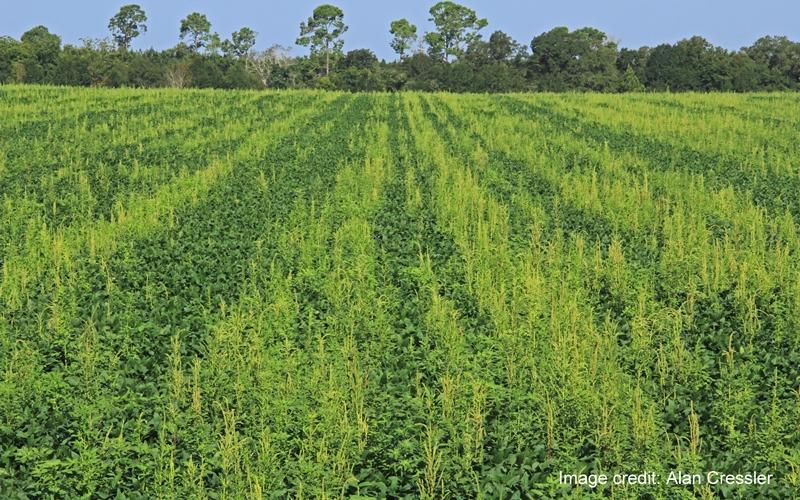 Infestation in a soybean field.
 -
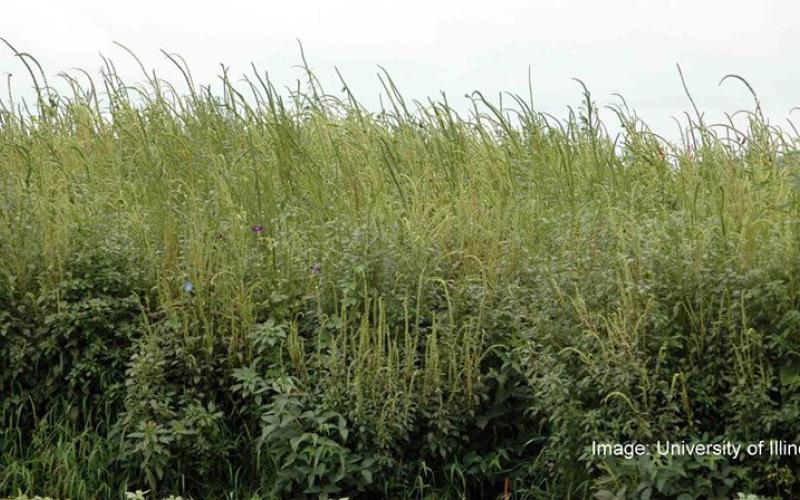 Infestation in a row crop field.
 -
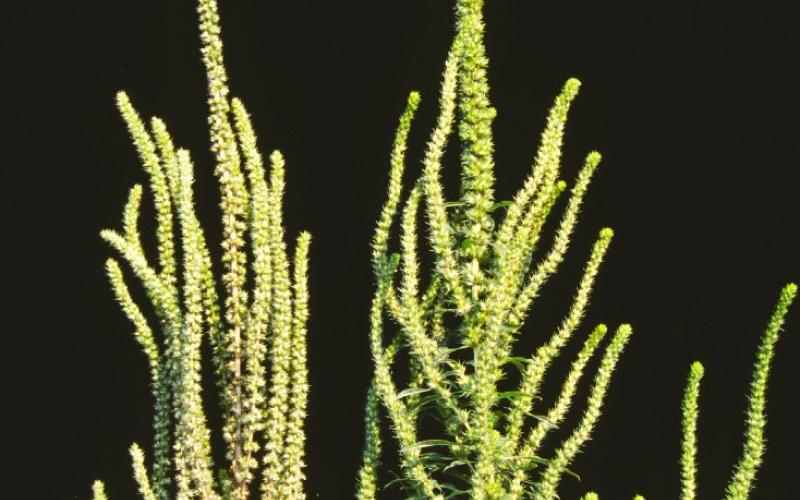 Male and female flowers side by side.
 -
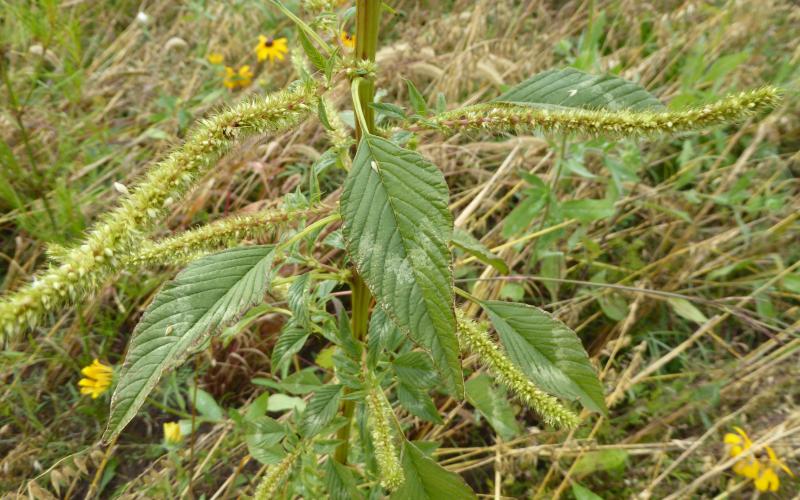 Palmer leaves have long petioles (leaf stalks), often longer than the leaf blade.
 -
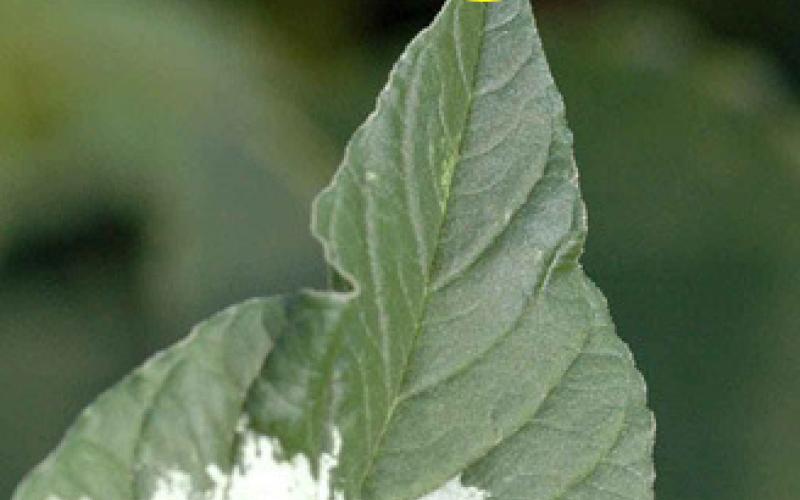 Leaves are pointed and may have a white, V-shaped (chevron) marking.
 -
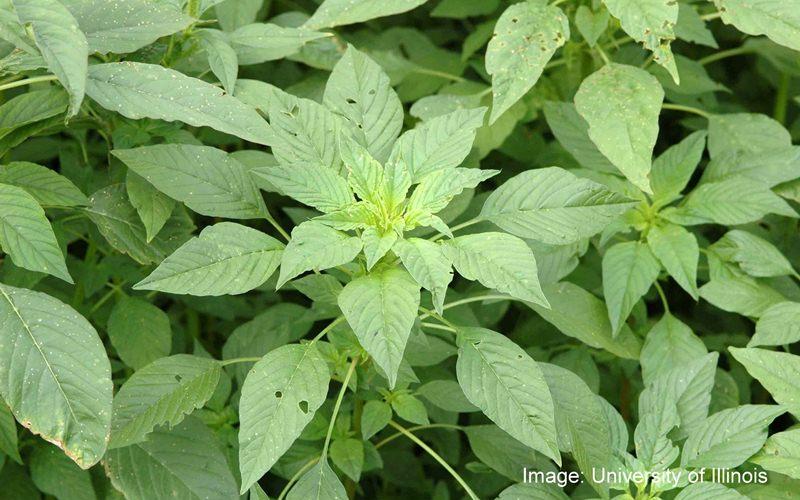 Plants have leaves with very long petioles.
 -
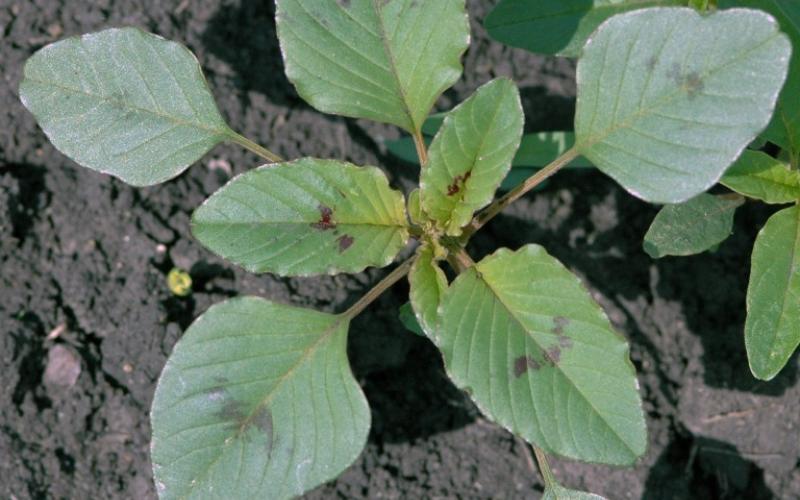 A Palmer seedling. Palmer plants do not have hairs on the stems and leaves.
 -
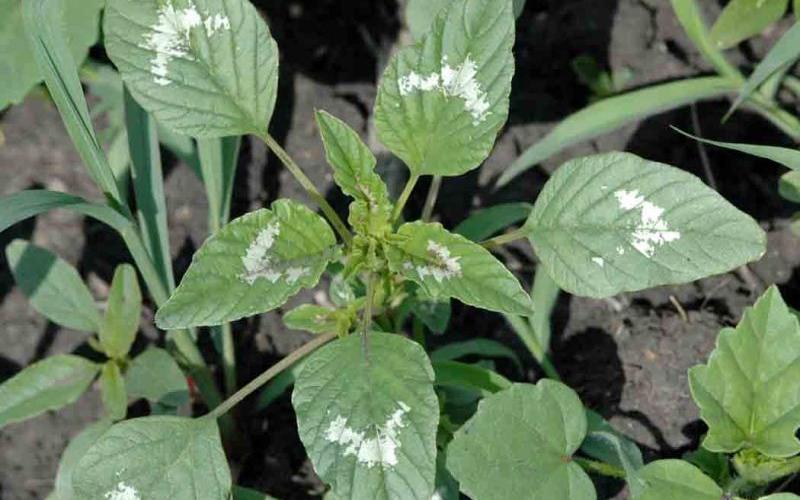 The leaves of some Palmer amaranth plants have a whitish V-shaped mark on them. Not all Palmer amaranth plants display this characteristic.
 -
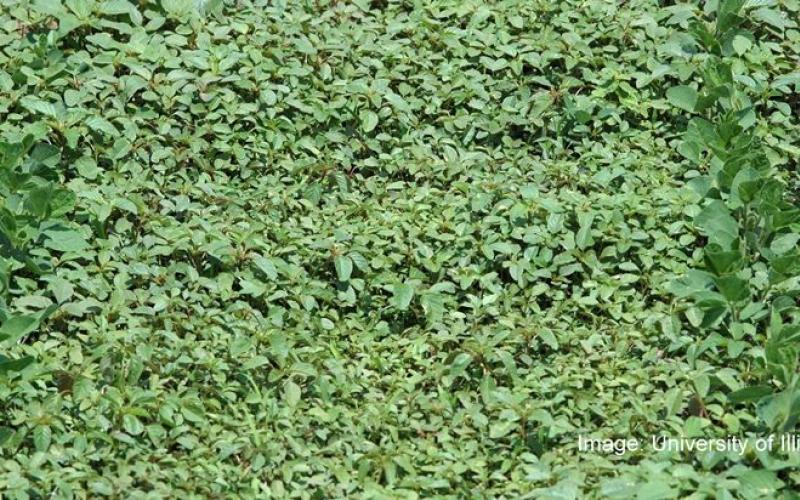 Palmer produces so much seed that seedlings carpet the soil.
Common Name: Palmer amaranth
Alternate Names: Palmer pigweed, careless weed
Scientific Name: Amaranthus palmeri S. Watson
Legal Status
All above and below ground parts of the plant must be destroyed. Additionally, no transportation, propagation, or sale of this plants is allowed. Failure to comply may result in an enforcement action by the county or local municipality.
Background
Palmer amaranth is an annual plant native to the arid southwestern United States and northwestern Mexico. It is a traditional food of Native Americans groups including the Navajo, Pima, Yuma, and Mohave. Its life-cycle is adapted to desert conditions. When moisture is available, it can germinate, grow rapidly and produce large amounts of seed. Palmer amaranth was accidentally introduced to the southeastern United States.
- 1915: First reported in Virginia but was not considered problematic for some time.
- 1989: Documented in a weed survey in South Carolina.
- 1995: Ranked the most troublesome weed in cotton in the Carolinas.
- 2009: Ranked the most troublesome weed in cotton in the southern United States.
Palmer amaranth has developed resistance to multiple classes of herbicides and their different modes of action, making it challenging to control. Palmer amaranth seed was accidentally moved, perhaps with cotton meal, and continues to spread. It is causing extensive corn and soybean crop losses in many areas.
Learn more about Palmer amaranth in Minnesota.
Description
- Palmer amaranth is a fast-growing summer annual that commonly reaches heights of 6 to 8 feet and can reach 10 feet or more.
- Leaves are smooth, green and arranged alternately around the stem. The leaves are oval to diamond-shaped with a small, sharp spine at the leaf tip.
- Leaves of some Palmer amaranth plants have a whitish, V-shaped marking on them. Not all Palmer amaranth plants display this characteristic.
- There are separate male and female plants.
Palmer amaranth looks like our native pigweeds, including tall waterhemp (Amaranthus tuberculatus), redroot pigweed (Amaranthus retroflexus), and smooth pigweed (Amaranthus hybridus). Distinguishing characteristics include:
- Redroot and smooth pigweeds have fine hairs on their stems and leaves. Palmer amaranth and waterhemp do not have these hairs.
- The petiole (stalk connecting a leaf to the stem) is longer than the length of the leaf. For tall waterhemp, the petiole will be only half the length of the leaf.
- Seedhead spikes on female Palmer amaranth plants are much taller (up to three feet long) and pricklier than waterhemp or redroot and smooth pigweed spikes.
Habitat
Palmer amaranth is adapted to the arid habitat of the southwest desert. Outside of its native range, Palmer amaranth has been documented in annual row crop fields and disturbed, sunny areas.
Means of spread and distribution
Palmer amaranth spreads by seed. Female plants produce large quantities of seed. One study in Missouri documented more than 250,000 seeds produced per plant. Seed can spread through water movement, wildlife, and agricultural practices such as plowing, harvesting and spreading manure.
Palmer amaranth has been documented in 28 states, including neighboring South Dakota, Iowa and Wisconsin. In Minnesota, it has been documented in Douglas, Lyon, Todd and Yellow Medicine counties.
Impact
Palmer amaranth competes aggressively with crops and has a fast growth rate of 2-3 inches per day. It commonly reaches heights of 6 to 8 feet, greatly inhibiting crop growth. Yield losses have been up to 91% in corn and 79% in soybean.
Prevention and management
- Be proactive and prevent Palmer amaranth establishment. Learn to identify Palmer amaranth early and actively look for it in crop fields, borders, ditches and areas around dairies.
- Palmer amaranth is difficult to control because it can be resistant to multiple classes of herbicides and their different modes of action. Populations of Palmer amaranth have been documented with resistance to one or more of the following classes:
- Dinitroanilines, triazines
- ALS (acetolactate synthase) inhibitors
- glyphosate
- HPPD (4-hydroxyphenylpyruvate dioxygenase) inhibitor herbicide.
- Mowing alone is not as effective as cultivation, as Palmer amaranth plants are usually not killed by mowing. Plants can regrow from cut stalks and produce seed close to the ground. Mowing must therefore be done in conjunction with other methods of control like herbicide application, prescribed fire or propane weed torching to be effective.
- Prevent all Palmer amaranth plants from producing seed if possible. Plants can be hand weeded and removed for disposal. If hand weeding is not feasible, contact your local University of Minnesota Extension agent, co-op, or certified landscape care expert for a specific herbicide recommendation.
- Always clean vehicles and equipment after leaving infested areas. If seed was produced, deep tillage will reduce the quantity of seeds that can readily germinate.
- A cereal rye cover crop can reduce Palmer amaranth germination and growth.
Toxicity
Palmer amaranth can be toxic to livestock if the concentration of nitrates in the leaves is high.

