
-
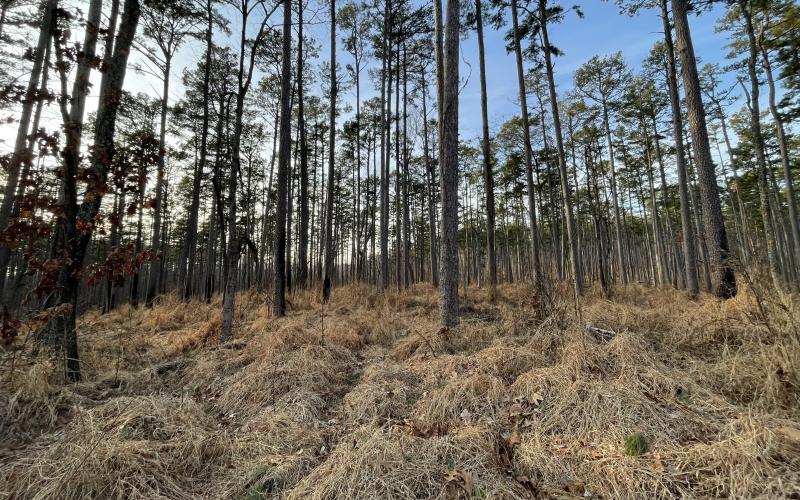 Dormant stiltgrass covers the ground layer. Photo by Jennifer Larson, United States Forest Service.
 -
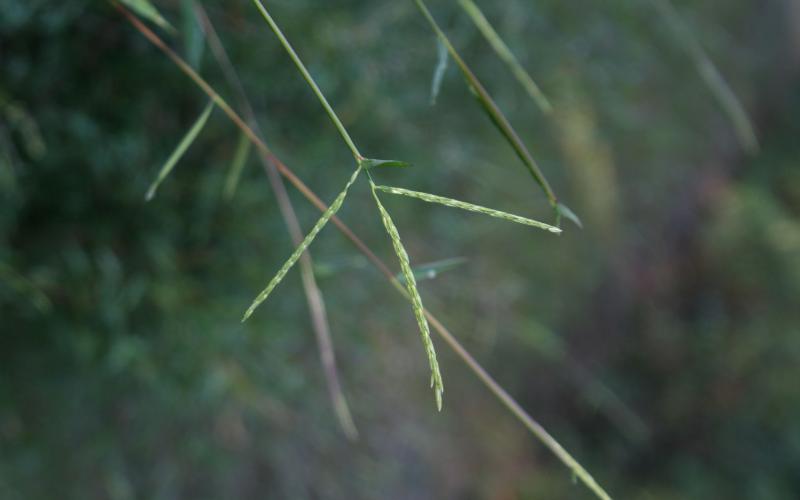 Flowering stalks have 1-3 spikes. Photo by Chris Evans, University of Illinois.
 -
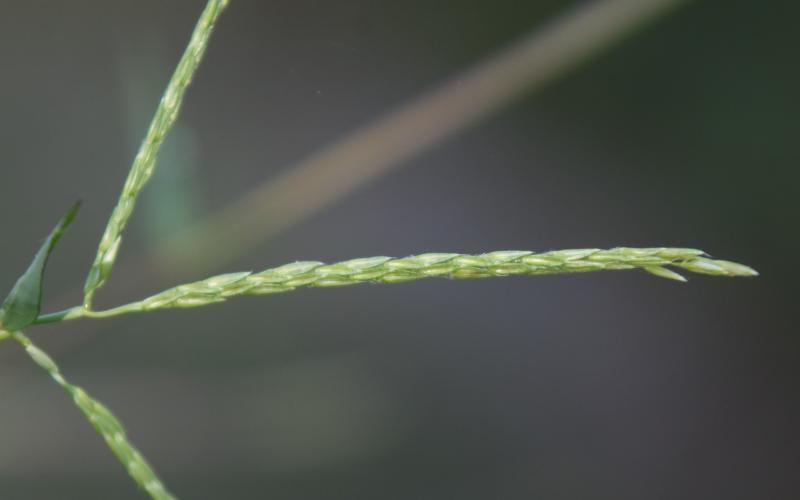 Closeup of the flower stalk. Photo by Chris Evans, University of Illinois.
 -
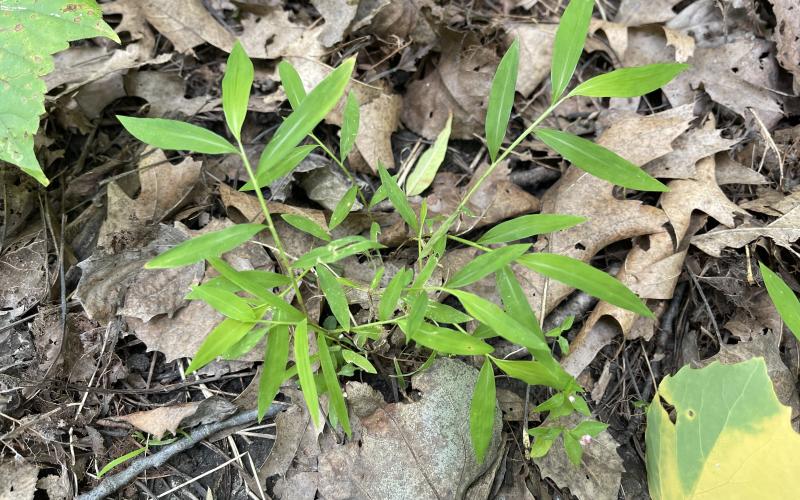 A single plant growing through a leaf layer. Photo by the Minnesota Department of Natural Resources.
 -
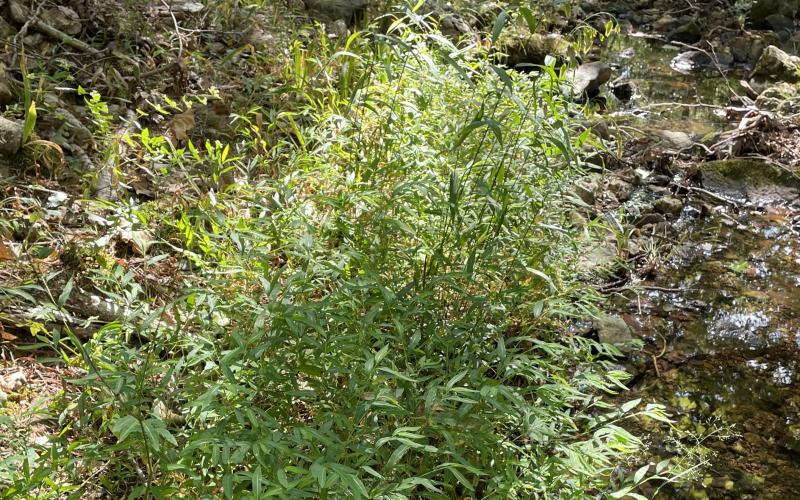 Stiltgrass growing along a waterway. Photo by Jennifer Larson, United States Forest Service.
 -
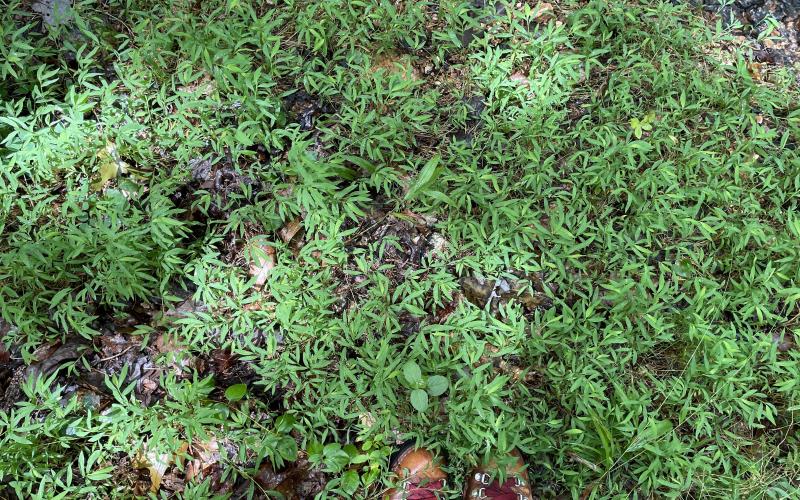 A carpet of short stiltgrass plants. Photo by Jennifer Larson, United States Forest Service.
Common names: Stiltgrass
Scientific name: Microstegium vimineum
Alternate Names: Packing grass, Flexible seagrass, Bamboo grass, and Brown top
Legal Status
All above and below ground parts of the plant must be destroyed. Additionally, no transportation, propagation, or sale of this plant is allowed. Failure to comply may result in an enforcement action by the county or local municipality.
Background
Stiltgrass is native to Asia, where it was commonly used as packing material. It was most likely introduced to North America through the transportation of goods. Stiltgrass was first documented in Tennessee in 1919 and has since spread throughout the eastern United States and west to Texas.
Description
- Each leaf has a shiny silver line running down the middle that divides the leaf unevenly. The leaves are long and narrow, with smooth edges.
- The stem is light green to reddish-purple, smooth, and terete (cylindrical or slightly tapering).
- Lower stems are often raised off the ground by roots (or “stilts”, giving the plant its common name)
- Lower stems are spreading, while upper stems are more erect.
- Flower spikes are 1-3 inches long with multiple small flowers along the spike (each flower up to ¼ inch long). Plants generally flower from late summer to early fall.
- Stiltgrass plants often grow 0.5 to 3 feet tall but can reach up to 6 feet.
Habitat
Stiltgrass can be found growing along forest edges, in wetlands, and in disturbed areas. It prefers moist, partially shaded growing areas but is adaptable to deep shade and full sun. Infestations usually start in disturbed sites and may spread into undisturbed areas.
Means of spread and distribution
Stiltgrass produces around 100 to 1,000 seeds per plant. Seeds are easily dislodged and moved by water, animals, humans, vehicles, and machinery. Stiltgrass has not been documented in Minnesota but there are infestations in Wisconsin.
Stiltgrass can grow in a variety of habitats, where it forms dense monocultures (where it is the only plant growing in an area) and crowds out native species. It reduces forage quality, as it provides little to no food value for grazing animals or native wildlife.
Prevention and management
- To prevent the spread of this plant, clean equipment, vehicles, and footwear before transportation from infested areas.
- Frequent, low-cut mowing can help reduce seed production, as well as mowing once in late summer before flowering occurs. When flowers are visible, seeds can still mature even if the plants are mowed or pulled; therefore, mechanical control should be done before flowers are visible.
- Consistent hand-pulling before seed set, repeated over multiple years, has been effective at removing small infestations of stiltgrass.
- Herbicides used to control crabgrass can also work for stiltgrass. For specific herbicide recommendations, contact your University of Minnesota Regional Extension Educator.
- For all management options, infestation sites will need to be monitored and treated repeatedly until the seedbanks are depleted.

