
-
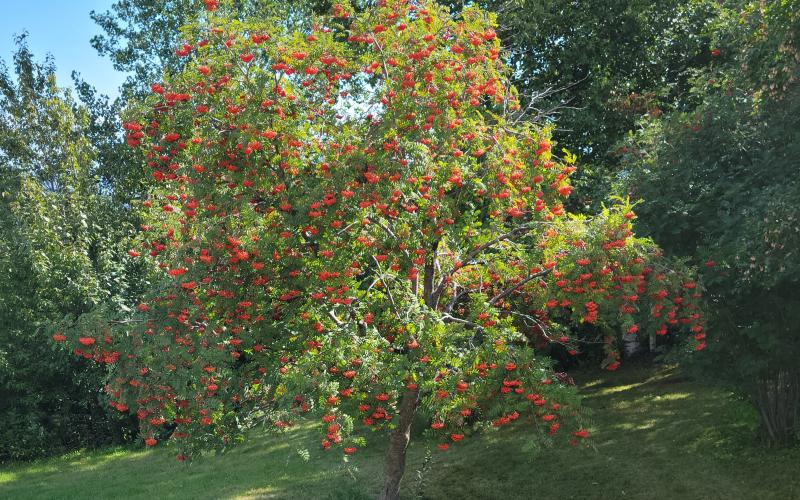 Planted and pruned trees can have a rounded canopy.
 -
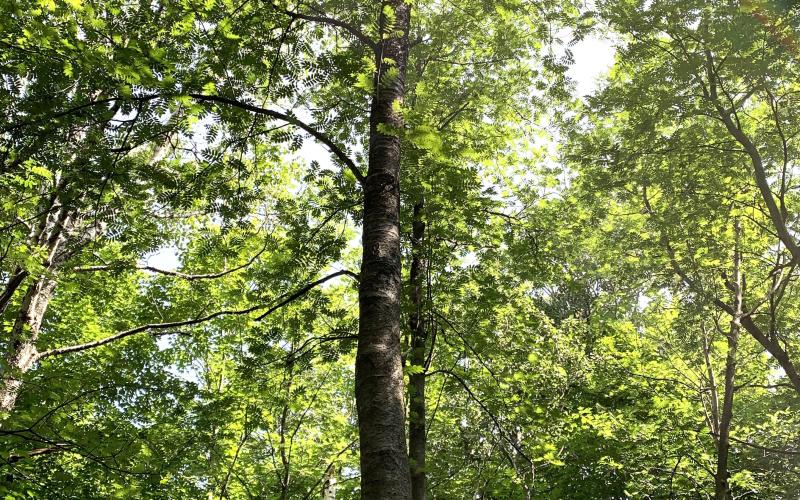 Rowan tree in an infestation.
 -
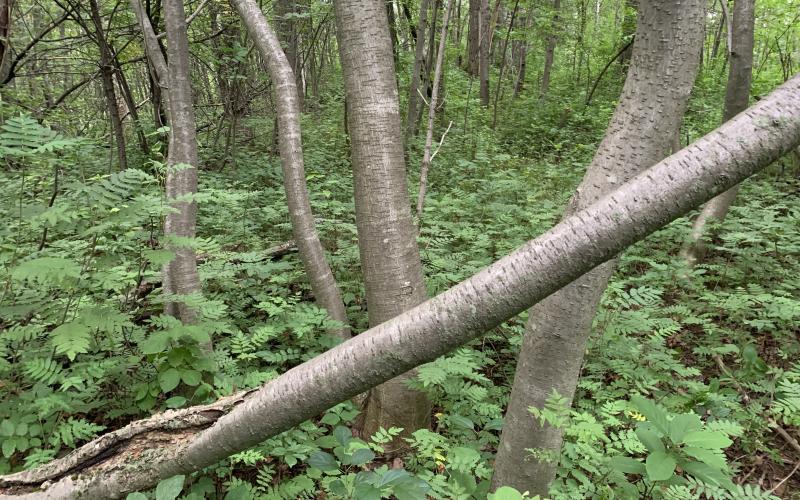 Trunks of rowan mountain ash trees dominate the canopy while a carpet of their seedlings is on the forest floor. The trunk of a fallen tree shows possible disease symptoms.
 -
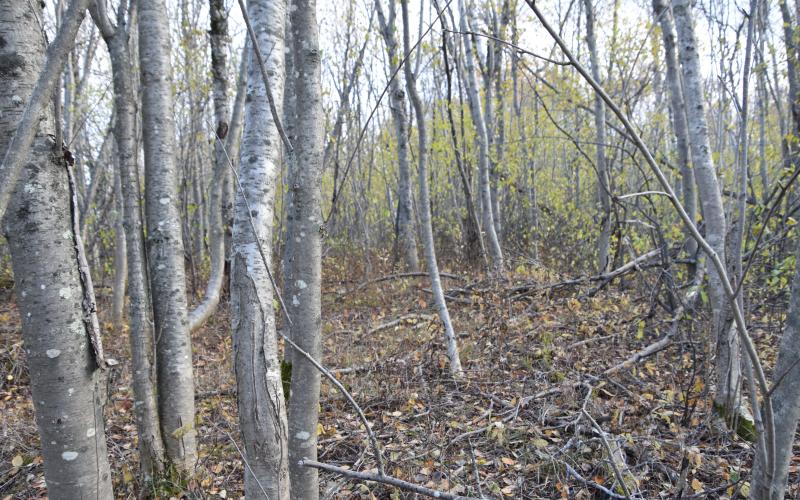 Rowan mountain ash infestation with both the canopy and floor dominated by rowan mountain ash.
 -
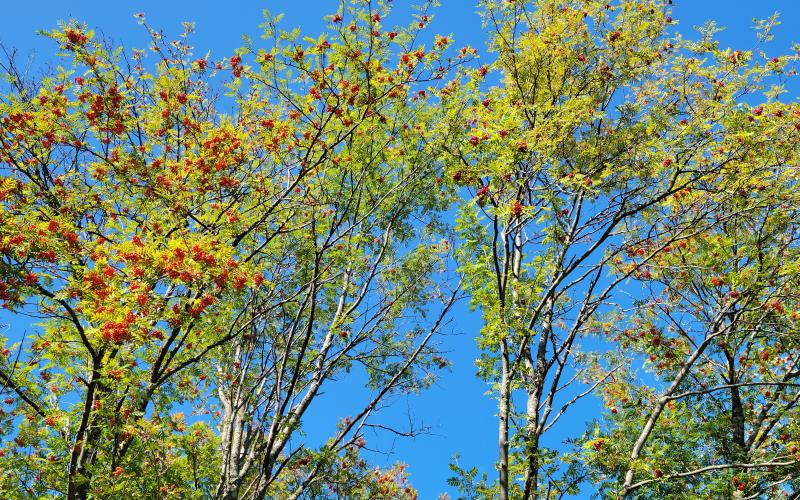 Canopy of a rowan mountain ash infestation in the early fall.
 -
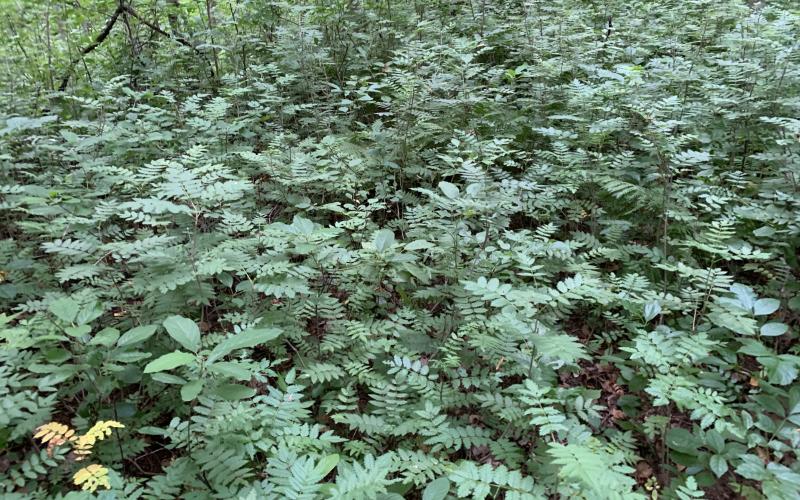 The leaflets of rowan mountain ash are the primary species on the forest floor. They are crowding out and shading other species.
 -
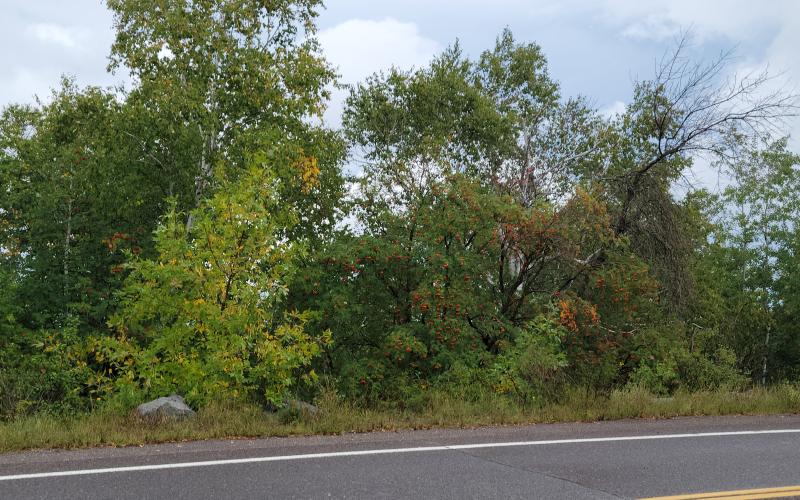 The bright fruit of these escaped rowan mountain ash trees stands out. It is likely that birds spread seed to this roadside location where the rowan trees are thriving.
 -
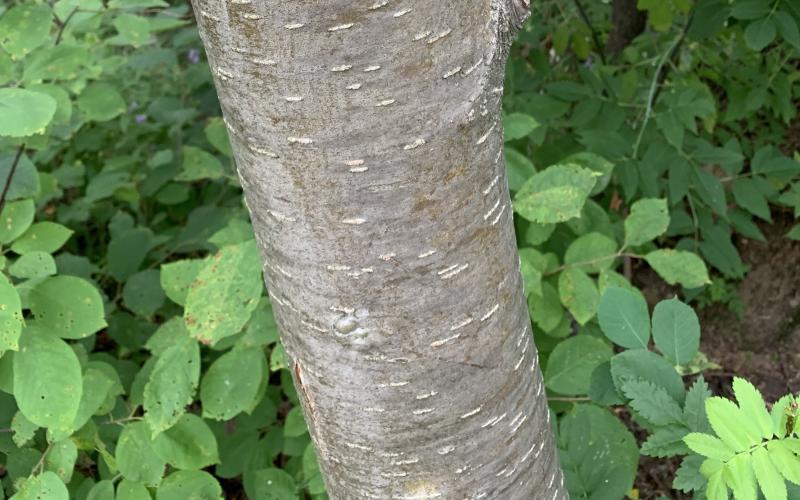 Bark fairly smooth on young trees with raised lenticels (air pores).
 -
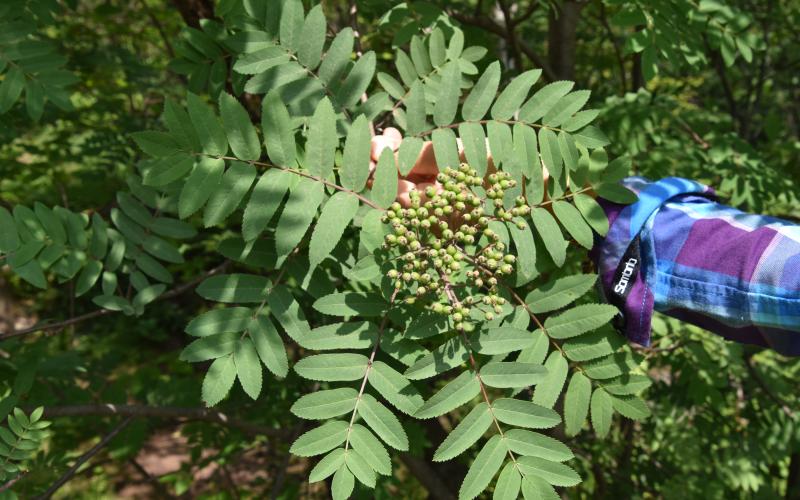 Immature green fruit develops after flowering.
 -
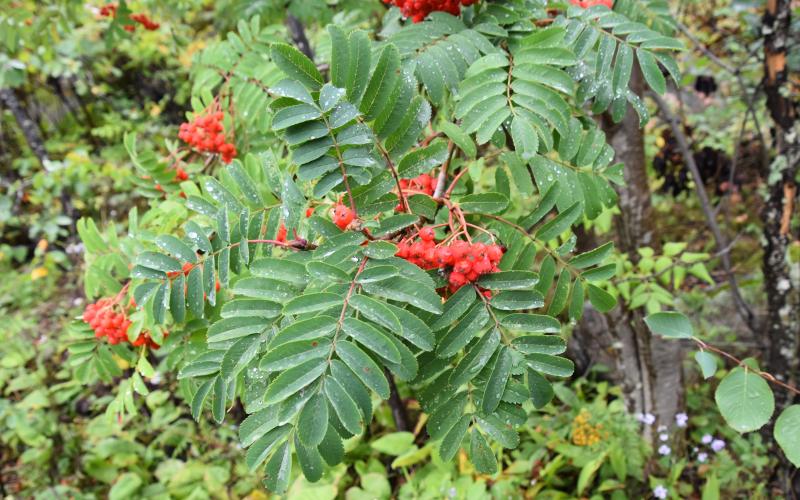 Mature red-orange fruit and leaves in the early fall.
 -
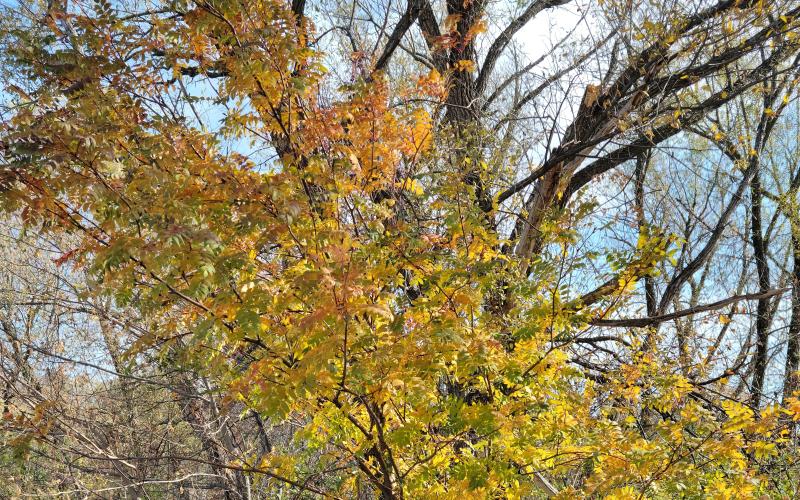 Fall color is generally gold but there can be red colors as well.
 -
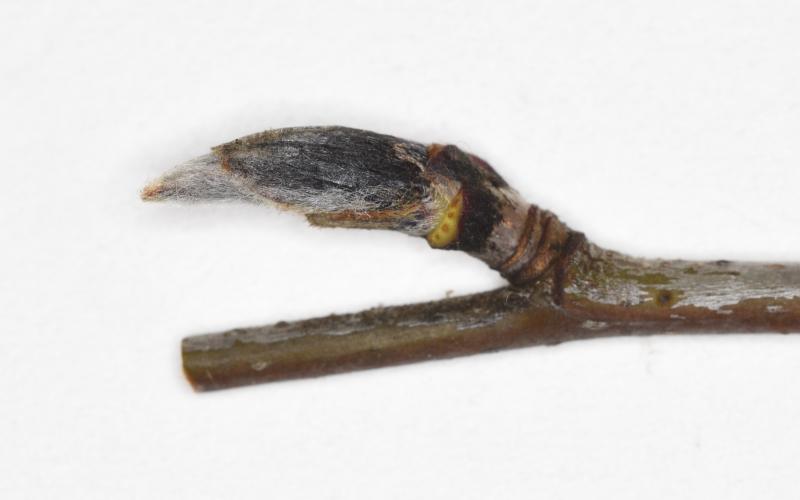 Buds have scales with light colored hairs on them.
 -
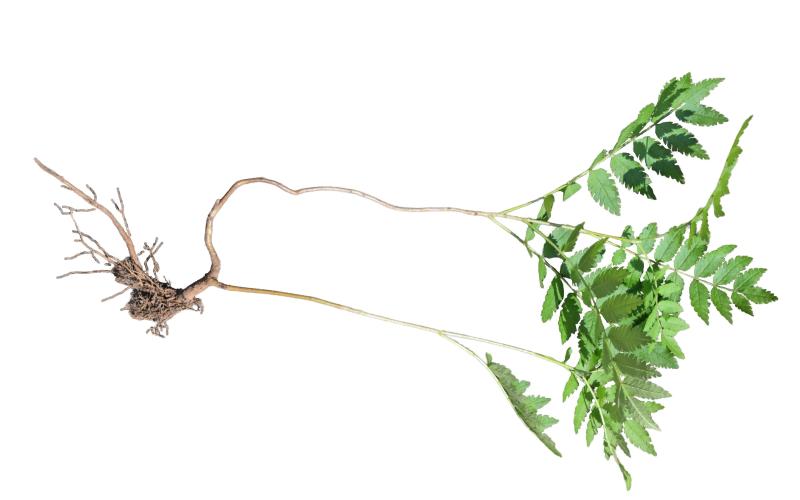 Rowan seedling.
Common Name: Rowan mountain ash, rowan, rowanberry, European mountain ash, Amur mountain ash
Scientific Name: Sorbus aucuparia L.
Related Species: There are over 100 Sorbus species worldwide. In Minnesota, there are two native mountain ash that look similar: American and showy mountain ash.
Legal Status
Three-year production phase-out period, after which sale of this species will be prohibited and the species will be designated as Restricted in 2029.
Background
Rowan mountain ash is a tree with attractive fall fruit that was introduced to North America for horticultural purposes. It has a large native range spanning Europe to eastern Asia, from Iceland and Scandinavia in the north to Sicily and Greece in the south and to far eastern Russia with scattered pockets in Georgia, Azerbaijan, Iran, Syria and Lebanon.
Description
- Rowan mountain ash is a small to medium-sized tree reaching about 40 feet tall. The tallest documented tree is 59 feet.
- It has many branches that grow low on the trunk resulting in a dense, rounded crown. Branches grow in an alternating pattern.
- Leaves are pinnately compound (a single leaf has multiple leaflets) with 9-13 serrate (toothed), oblong leaflets.
- Buds are large with overlapping scales that are covered in greyish hairs.
- Bark is typically smooth and grey with horizontal lenticels (air pores).
- Flowerheads are attractive with clusters of small, white flowers in late spring.
- Fruits ripen in the fall and are in orange-red to red clusters. There are approximately 2-3 seeds per fruit.
- Fall leaf color is typically yellow-gold.
Habitat
This species grows in a wide range of habitats, moisture levels and soil types. It grows in open sun and shade but tends to produce more flowers and fruit with ample sun. It is generally considered to do poorly south of USDA Zone 6, a climate region with average winter temperatures between -10°F to 0°F and warm summers.
Means of Spread and Distribution
- Rowan mountain ash is monecious, meaning male and female reproductive organs are on the same individual plant. At 10 years old, trees can begin producing seed.
- Reproduction is primarily by seed and a seedbank remains viable for about 3-4 years. Birds and other wildlife eat the fruit and move the seeds to new areas. Seeds germinate better, and seedlings grow faster, after passing through birds. Wind and water can also move seed. People can move seed when it becomes stuck in mud on their boots or vehicle tires.
- On rare occasions, there is clonal propagation by root suckers meaning that new trees grow from shoots sprouting from the roots of an existing tree.
- In Minnesota, escaped trees have been found in forested areas near neighborhoods where rowan mountain ash was planted. The largest infestations are in Duluth where there are urban areas adjacent to forests and rowan mountain ash was planted widely in residential landscapes.
Impact
- Rowan mountain ash can overtake the forest canopy and understory preventing regeneration of native forest species.
- It can host diseases such as fire blight, crown gall, cankers, rusts, and scab which may spread to other plants.
- A study in Patagonia documented that rowan mountain ash has a higher growth rate and less foliar damage from herbivores than native mountain ash species, increasing its competitive ability.
- There is opportunity for hybridization between rowan and native mountain ashes because they grow in close proximity in northeast Minnesota. Hybrids of these species have not been found in the Americas, but their hybridization potential has not been studied to date.
Prevention and Management
- Seedlings can be hand pulled to control small, young populations.
- Learn how to identify and remove saplings.
- For larger populations, identify and control mature, fruiting individuals first.
- Prevent seed movement by thoroughly cleaning boot and tire treads before moving from one site to another.
- Cut stump and basal bark herbicide applications for trees and foliar applications to the leaves of seedlings and sapling may be effective. For herbicide recommendations, contact your local University of Minnesota Extension office.
- If you prefer to hire a contractor to do the work, see information about how to hire a tree care professional.
Toxicity
N/A

