
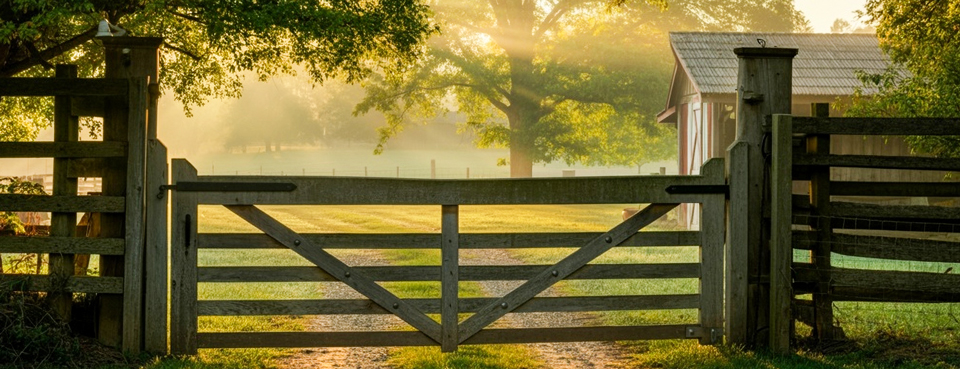
Strong biosecurity helps keep your animals healthy, your business stable, and your community safe. Foreign Animal Disease outbreaks can lead to quarantined farms, preventing non-permitted animal movement.
Having a plan in place to recognize and respond to a disease will help your farm maintain operations during an outbreak.
Farm Biosecurity and Secure Food Supply Plans
Biosecurity plans are the first step in preparing your farm to reduce the risk of introducing animal disease. Secure Food Supply Plans increase the likelihood that disease control measures would only minimally affect your farm and allow normal business to continue during a foreign animal disease outbreak. Non-commercial, hobby, or backyard farms may not require a Secure Food Supply plan but should develop and follow a strong biosecurity plan to limit exposure of animals to disease.
Financial Assistance
The following grants and cost-share programs are available through the MDA to offset upgrade costs.
AGRI Protecting Livestock from Avian Influenza (Protect) Grant helps Minnesota farmers and ranchers buy and install supplies or equipment to prevent the transmission of avian influenza on their farms.
Preparing for Extreme Weather (Prepare) Grant helps Minnesota livestock and specialty crop producers buy and install supplies or equipment that will help make their operations more resilient to extreme weather
AGRI Livestock Investment Grant encourages long-term industry development for Minnesota livestock farmers and ranchers by helping them improve, update, and modernize their livestock operation infrastructure and equipment.
Additional eligibility criteria and application information is available by calling 651-201-6000 or emailing livestock.mda@state.mn.us
Biosecurity Planning One Step at a Time
Follow these five steps to protect your farm and keep Minnesota agriculture thriving:

Step 1: Establish a Foundation for Biosecurity
Map your site showing restricted access points and your Line of Separation (LOS).
Physically mark the LOS clearly using signs, fences, and gates.
Control access to your farm by limiting entry to essential personnel only.
Write procedures for people, vehicles, and supplies entering and exiting.
Plan for feed/water supply emergencies and scenarios that limit movement.
Step 2: Keep Movement Records
Register your farm and get a National Premise Identification Number (PIN)
A National PIN is a unique code that is permanently assigned to the physical location where animals are housed or graze.
Required for Secure Food Supply plans.
Required to request a movement permit during a disease outbreak.
Apply on the Minnesota Board of Animal Health (BAH) website or call 651-296-2942.
Log all animal, people, and vehicle movements. Use forms or digital tools to maintain records for at least 30 days.
Step 3: Implement Surveillance and Monitoring
Teach caretakers to spot early signs of illness of foreign animal diseases.
Do daily health checks and record abnormal behaviors, symptoms, or observations at necropsy.
Report animal health problems immediately by calling your vet or the BAH at 651-296-2942.
Step 4: Manage Movement and Permitting
Understand how movement permits are issued by the BAH.
Properly ID all animals or animal groups according to species standards.
Clean and disinfect all vehicles, trailers, and equipment before crossing the LOS. Use approved disinfectants and keep records.
Step 5: Train and Stay Organized
Assign people to specific roles laid out in your biosecurity plan. Practice outbreak response by holding drills and refreshing training.
Create a culture of biosecurity on your farm. Set a good example and encourage accountability among employees.
Stay prepared by updating your plan on an annual basis or when your site, animals, personnel, or contacts change.
 Quick Checklist
Create your site map and install signage and barriers at all LOS access points
Document entry/exit protocols and recordkeeping practices
Request a National PIN
Train staff to monitor animal health and report signs of illness
Define when and how to clean and disinfect equipment
Assign roles and train staff on biosecurity expectations
Enhanced Secure Food Supply Plans
Secure Food Supply Plans help prove your farm’s disease status, keeping markets open and livestock moving. Animal industries recognize the importance of biosecurity planning and have worked with regulators and academics to develop species-specific templates to use.
Click on the links for species specific biosecurity recommendations. Note that if your farm has populations of multiple commercial species, you should write biosecurity plans for each commodity.
Secure Beef Supply Plan is a collaboration among the beef industry, state and federal government agencies, Iowa State University, and Kansas State University.
Secure Milk Supply Plan is a collaboration among the dairy industry, state and federal government agencies, Iowa State University, University of California Davis, and the University of Minnesota.

Secure Pork Supply Plan is a collaboration among the swine industry, state and federal government agencies, Iowa State University, and the University of Minnesota. The U.S. Swine Health Improvement Plan (U.S. SHIP) is a cooperative State-Federal-industry program designed to improve the health and marketability of U.S. swine and pork products.
Secure Poultry Supply Plan is a collaboration of the poultry industry and the University of Minnesota. The National Poultry Improvement Plan (NPIP) is a federal-state cooperative that provides the surveillance and certification framework for poultry producers to ensure their flocks are free from disease.
Secure Sheep and Wool Supply Plan is funded by the American Sheep Industry Association and USDA.

