
-
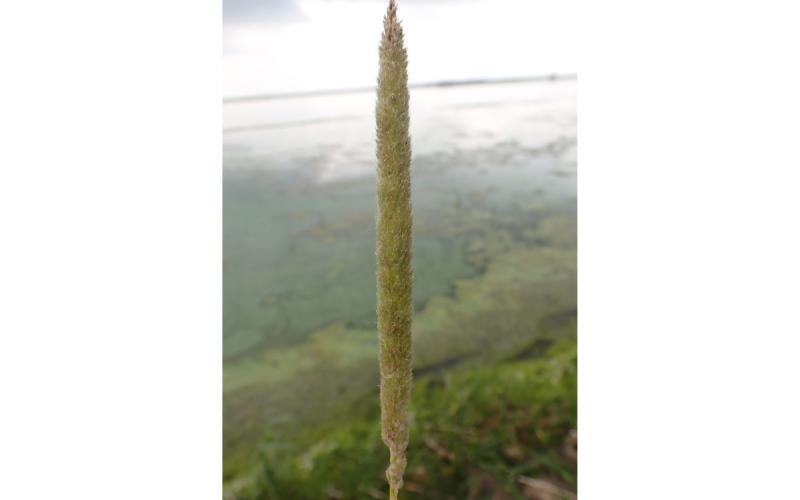 Unripe, green flower head (inflorescence). Photo by MN Department of Natural Resources.
 -
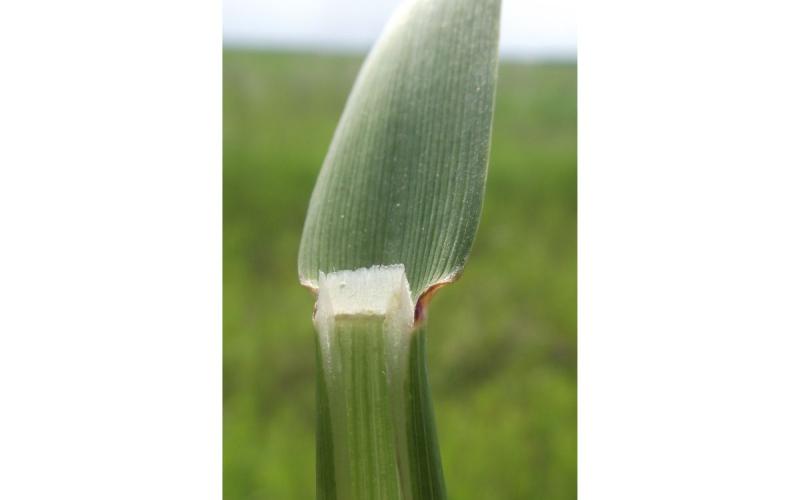 Ligule (papery membrane). Photo by MN Department of Natural Resources.
 -
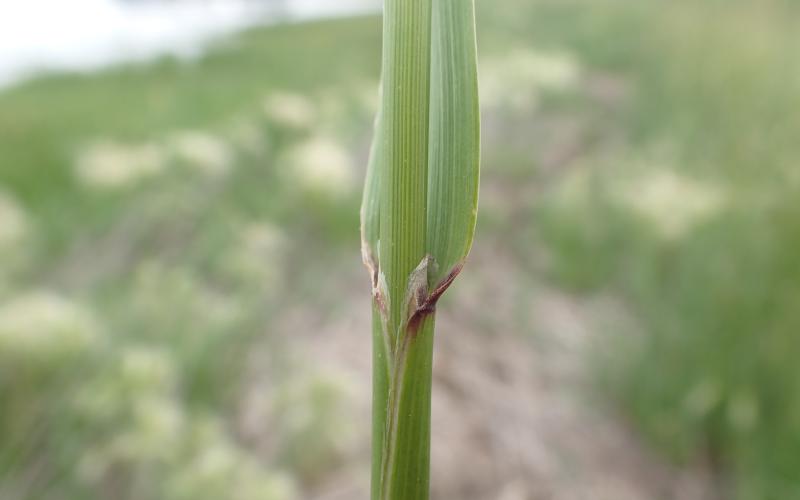 Leaf and ligule (papery membrane) wrapping around the stem. Photo by MN Department of Natural Resources.
 -
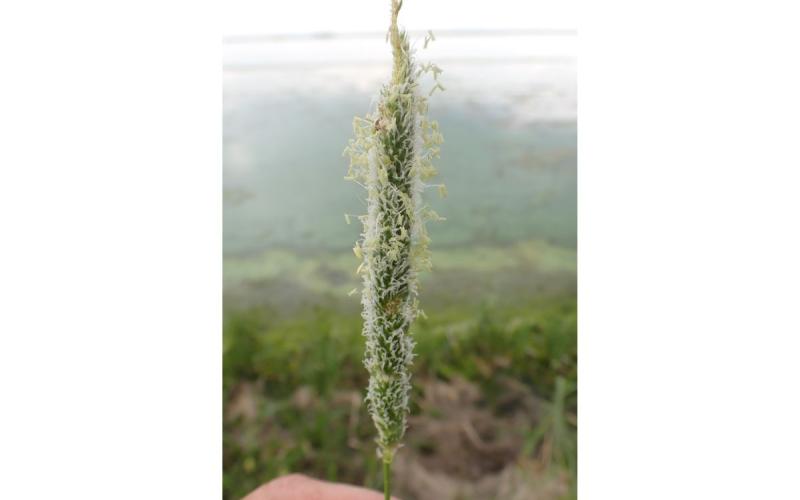 Flowering flower head (inflorescence in anthesis). Photo by MN Department of Natural Resources.
 -
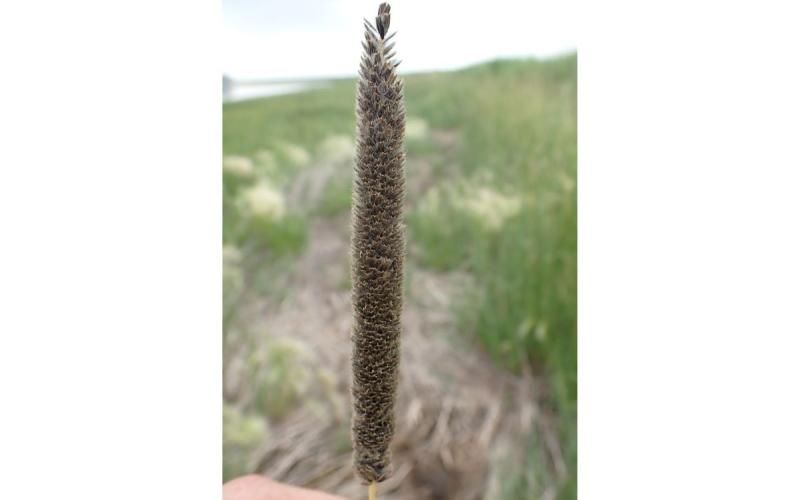 Flower head with seeds (seed head or mature inflorescence). Photo by MN Department of Natural Resources.
 -
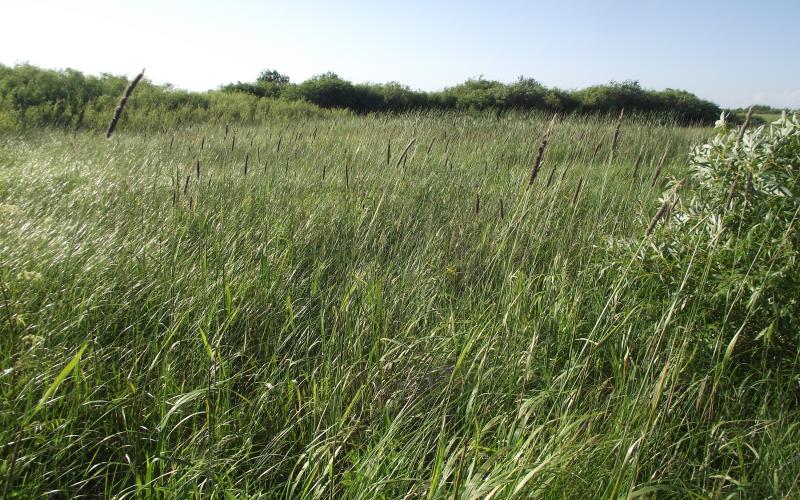 Stand of Creeping meadow foxtail. Photo by MN Department of Natural Resources.
 -
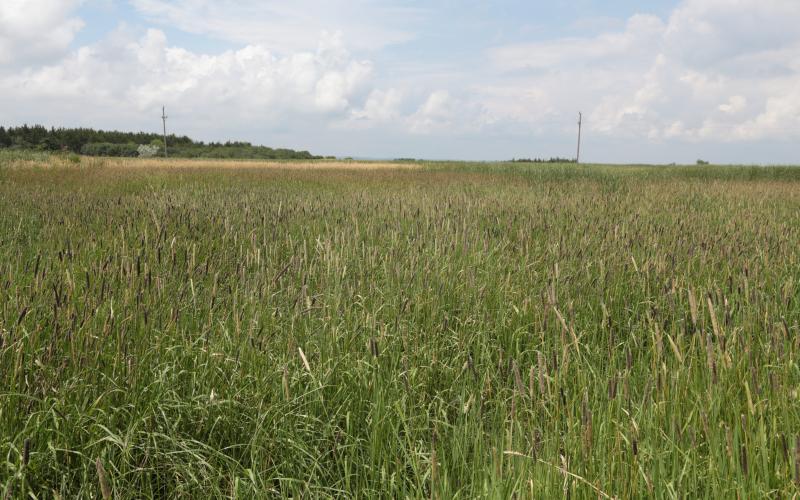 Creeping meadow foxtail can create dense monocultures. Photo by MN Department of Natural Resources.
Common names: Creeping meadow foxtail
Scientific name: Alopecurus arundinaceus
Alternate Names: Creeping foxtail
Legal status
Propagation and sale of this plant are prohibited in Minnesota. Transportation is only allowed when in compliance with Minnesota Statute 18.82. Although restricted noxious weeds are not required to be controlled or eradicated by law, landowners are strongly encouraged to manage these invasive plants on their properties to reduce spread into new areas.
Background
Creeping meadow foxtail is a perennial, rhizomatous (meaning the plant spreads by growing underground stems called rhizomes), cool-season grass native to Eurasia. It was introduced to North America in the early 1900s as a forage crop and has also been used in erosion control and soil stabilization plantings. It has been documented mainly in the western half of the United States, including North Dakota, South Dakota, and western Minnesota.
Description
- Leaves are 0.2 to 0.3 inches wide and 2.5 to 16 inches long. They grow at the base of the plant (basal) and are arranged alternately. Notably, the basal leaves near the bottom are the longest with leaves along the stem being shorter.
- Leaves feel smooth on the top side while the bottom side of leaves feel rough. They are long and have a pointed tip at the end of the leaf (lance-linear in shape).
- Leaves are attached to the stem with a 0.03- to 0.2-inch-long ligule (thin, papery membrane).
- Stem grows between 12 to 47 inches tall.
- Flower is a 1.5 to 4-inch-long spike of small florets that changes from green to purple to black as florets mature.
- Seeds are black, covered in small hairs, and 0.05 inches long.
Habitat
Creeping meadow foxtail is well adapted to wet areas and can grow in moist to wet soils. It prefers full sun and can be found in pastures, ditches, roadsides, floodplains, stream banks, prairies, wetlands, and meadows.
Means of spread and distribution
Creeping meadow foxtail can spread by seed and rhizomes (underground stems). Rhizomes spread underground and make existing infestations larger. Broken pieces of rhizomes can establish new patches elsewhere.
Impact
Creeping meadow foxtail can create dense monocultures that outcompete native plant species and impair water movement in waterways, ditches, and roadsides.
Prevention and Management
- To prevent spread from existing patches, clean all rhizomes and seeds from equipment, vehicles, and footwear to avoid transportation from infested areas.
- Plants may be dug or pulled by hand or with equipment.
- Grazing and mowing don’t control creeping meadow foxtail but can reduce the amount of plant material.
- In thick infestations where negative impacts to non-target species are minimal, herbicides containing glyphosate have been shown to be effective, specifically when applied between late September until the first frost. When non-grass species need to be protected, use an herbicide that targets only grasses. Creeping meadow foxtail often grows in wet areas, so it is essential to understand the regulations for herbicide use in or near water. For specific herbicide regulations and recommendations, contact your University of Minnesota Extension educator.
- For all management options, infested sites must be monitored and treated repeatedly until rhizomes die back and the seedbank is depleted.

