
-
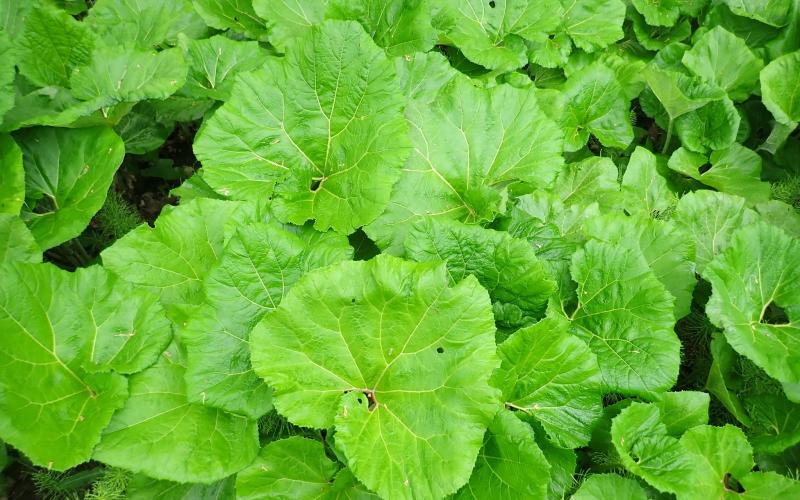 Common butterbur leaves are large and heart shaped. Photo by Photo by Steve Garske, Invasive Species Coordinator, Great Lakes Indian Fish and Wildlife Commission.
 -
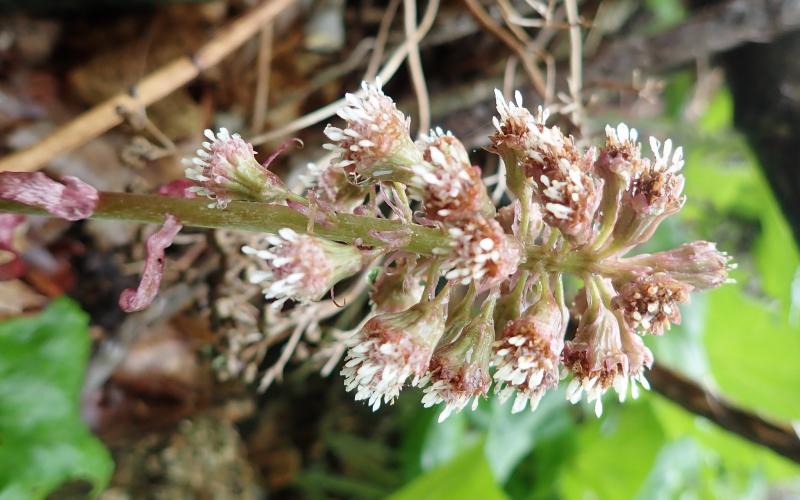 Purplish flower appears before the leaves emerge. Photo by Steve Garske, Invasive Species Coordinator, Great Lakes Indian Fish and Wildlife Commission.
 -
 Flower stalks above the leaves. Photo by Steve Garske, Invasive Species Coordinator, Great Lakes Indian Fish and Wildlife Commission.
 -
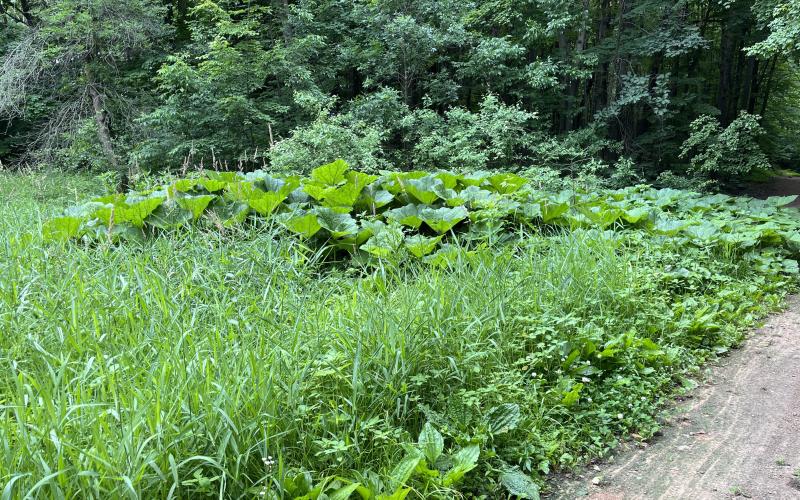 Common butterbur growing along a trail. Photo by the MDA.
 -
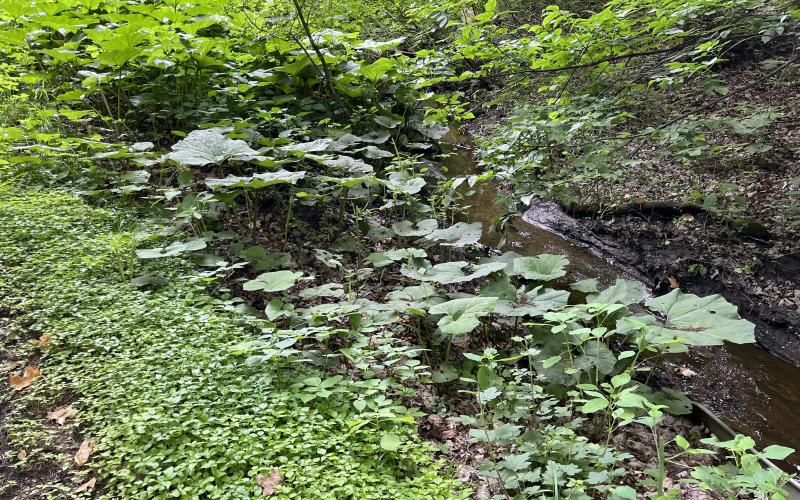 Common butterbur growing along a waterway. Photo by the MDA.
 -
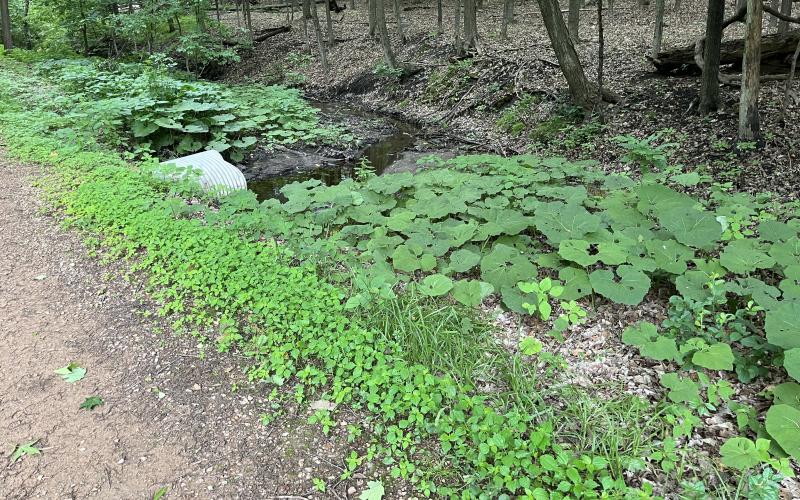 Common butterbur growing in a wooded area. Photo by the MDA
 -
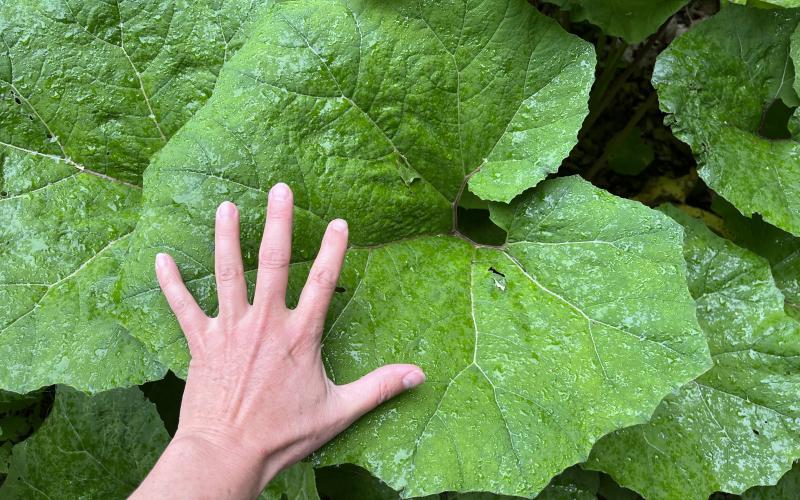 Common butterbur leaf. Photo by the MDA.
Common Name: Common butterbur, butterfly dock, pestilence wort
Scientific Name: Petasites hybridus (L.) G. Gaertn., B. Mey, & Scherb.
Related Species: Giant butterbur
Legal Status
Three-year production phase-out period, after which sale of this species will be prohibited and the species will be designated as Restricted in 2029.
Background
Common butterbur is a perennial forb native to Europe, Northern Iran, and Algeria. It was introduced to North America for medicinal purposes.
Description
- Herbaceous perennial with huge leaves up to 3 feet across and 3-4 feet tall.
- Large leaves can be heart-shaped and have dense hairs on the underside; they resemble rhubarb.
- Plants are dioecious (male or female). Although male and female flowers can be distinguished from each other, both grow on a terminal spike with pink-purple clusters of small flowers that emerge before the foliage in the spring.
- Fruit and seeds appear later in the season and only on female plants, in a white, flower-like tuft called “pappi”.
Habitat
Common butterbur grows in shaded areas with moist soil, including riverbanks, shorelines, wetland edges, forested floodplains, and roadside ditches.
Means of spread and distribution
Common butterbur plants are dioecious and need both female and male plants present to produce seeds. The female plants can produce many seeds. The plants have tuberous, fleshy, creeping roots and reproduce from fragments of these tubers, root pieces, and rhizomes.
Humans move root pieces through tillage, construction, and landscape plantings. In riparian areas, root pieces may move downstream during flooding. Seeds have feathery white pappi (bristles) attached that allow for wind dispersal.
Impact
Common butterbur has naturalized along riparian areas in Michigan, Minnesota, and Wisconsin. The plant grows aggressively and the large foliage shades out native plant species. Its large leaves shade out other plants which leaves the soil bare and can contribute to erosion. Although populations recorded in Minnesota are small, the plant has the potential to change native ecosystems due to its aggressive growth and ability to outcompete other plants.
Prevention and management
- Due to the plant’s spreading rhizomes, dig or hand-remove the entire root system and monitor for re-sprouting. The possibility of accidental spread is high because the plant can reproduce from root fragments.
- Herbicide applications may be effective. Foliar applications should be done during the active growing season. For herbicide recommendations, contact your local University of Minnesota Extension office.
Toxicity
N/A

