
-
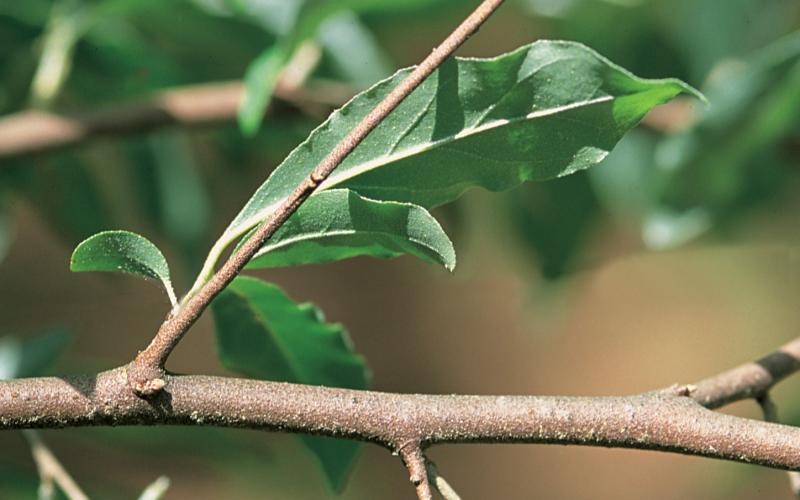 Autumn olive trunks and branches have sharp thorns. Photo by James H. Miller, USDA Forest Service.
 -
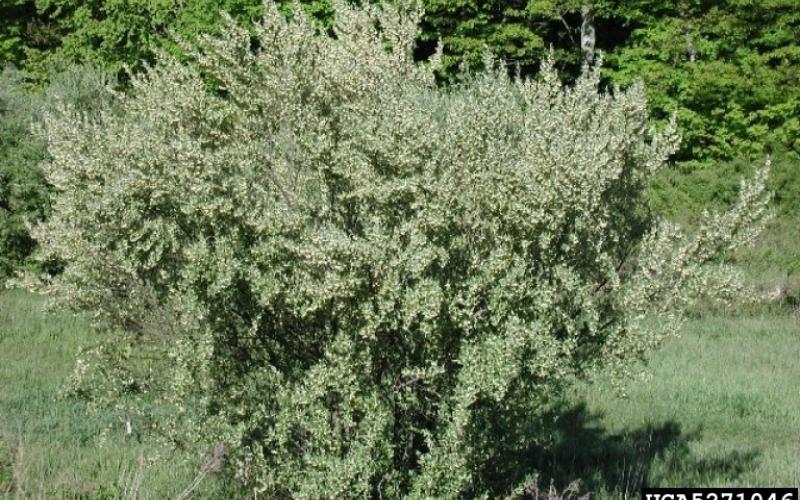 Autumn olive can grow as a shrub. Photo by Leslie J. Mehrhoff, University of Connecticut.
 -
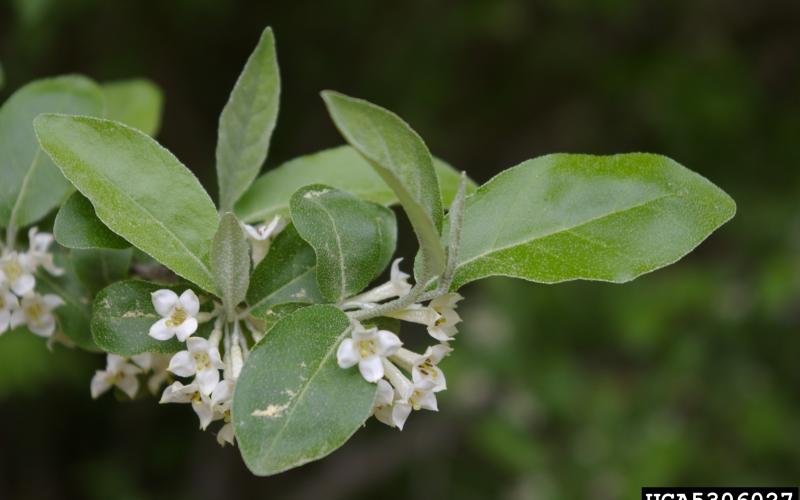 Cluster of Autumn olive flowers in bloom. Photo by Emma Erler, University of New Hampshire.
 -
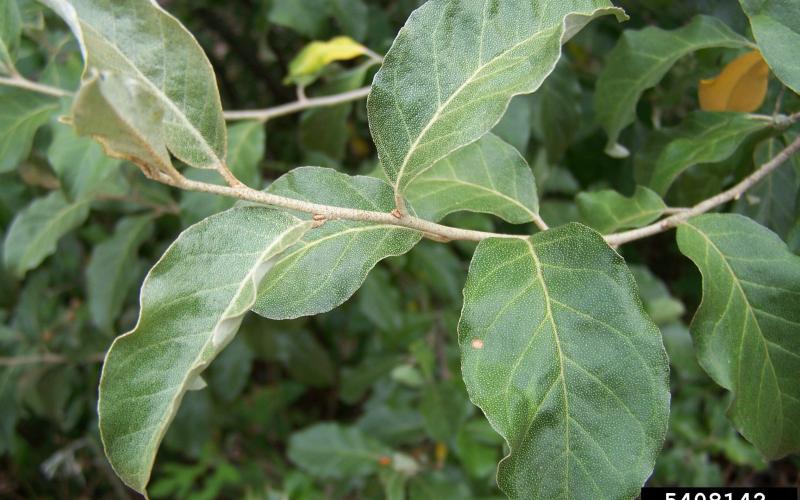 Closeup of Autumn olive leaves. Photo by Karan A. Rawlins, University of Georgia.
 -
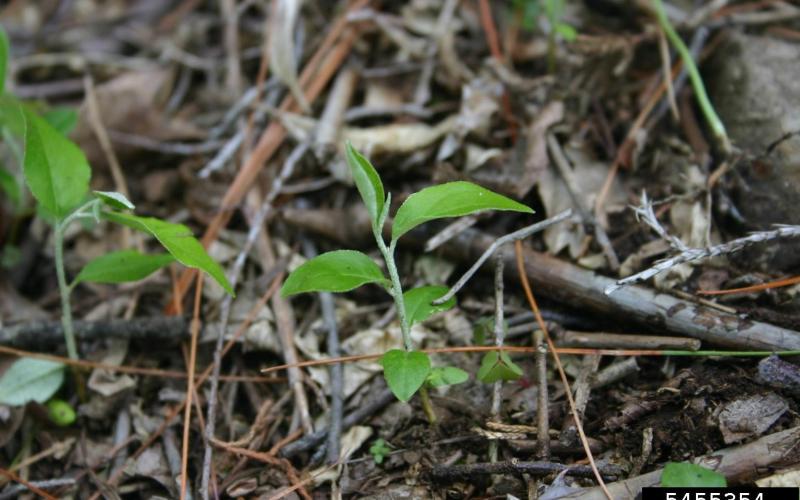 Autumn olive seedlings can be hand pulled. Photo by Leslie J. Mehrhoff, University of Connecticut.
Common name: Autumn Olive
Scientific name: Elaeagnus umbellata
Alternate Names: Russian Olive, Oleaster, Spreading Oleaster, Autumn berry, Autumn Elaeagnus
Legal Status
Sale of this plant is prohibited in Minnesota and transportation is only allowed when in compliance with Minnesota Statute 18.82. Although restricted noxious weeds are not required to be controlled or eradicated by law, landowners are strongly encouraged to manage these invasive plants on their properties to reduce spread into new areas.
Background
Autumn olive is an invasive, deciduous shrub native to Afghanistan and eastern Asia. It was introduced to the United States in the 1800s as an ornamental plant and for use in windbreaks, erosion control, wildlife habitats, and forest restoration. Autumn olive is no longer recommended for these purposes and has been banned from sale in many states.
Description
- Woody shrub or tree with several woody stems or trunks. Trunks and branches have sharp thorns.
- The plant can grow up to 20 feet tall and 30 feet wide.
- Leaves are 2-4 inches long and taper at the tips. They are grayish green with distinctive silvery scales on the underside of the leaves.
- Autumn olive blooms in clusters of 1-8 bell-shaped flowers. Cream or pale-yellow flowers bloom in early spring from April to June.
- Produces red berries speckled with silver scales.
Habitat
Autumn olive is primarily found in disturbed areas, thickets, forest margins, meadows, fields, roadsides, and fencerows throughout the central and eastern United States.
Means of spread and distribution
Autumn olive can produce over 60,000 seeds per plant each year. The seeds are consumed and spread by birds and mammals.
Impact
Autumn olive can shade out and outcompete native plants. This can reduce forage for animals as the fruit of autumn olive has low nutritional value for native wildlife. Additionally, autumn olive changes soil chemistry by increasing nitrogen levels which can prevent other plants from establishing. This can negatively impact plants adapted to low-nutrient environments, like prairies.
Prevention and Management
- Plants can be removed by digging or hand-pulling.
- Cut stumps will resprout unless treated with herbicide. For herbicide recommendations, contact your local University of Minnesota Extension office.

