
-
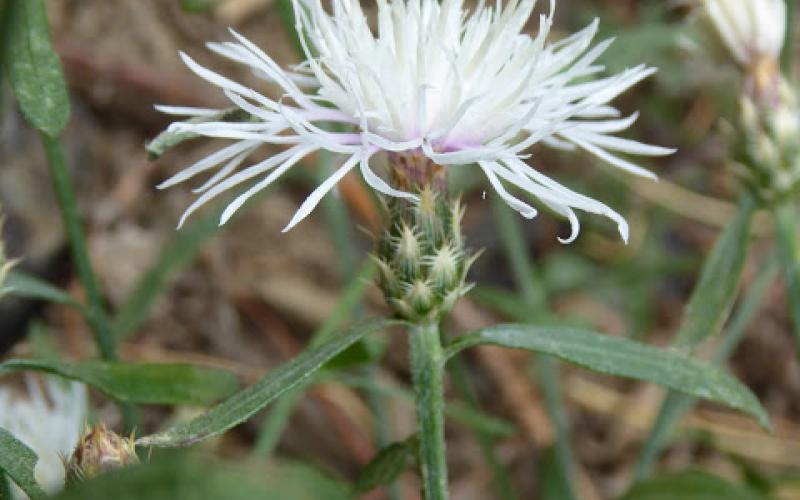 Urn-shaped white flower at the end of the stem.
 -
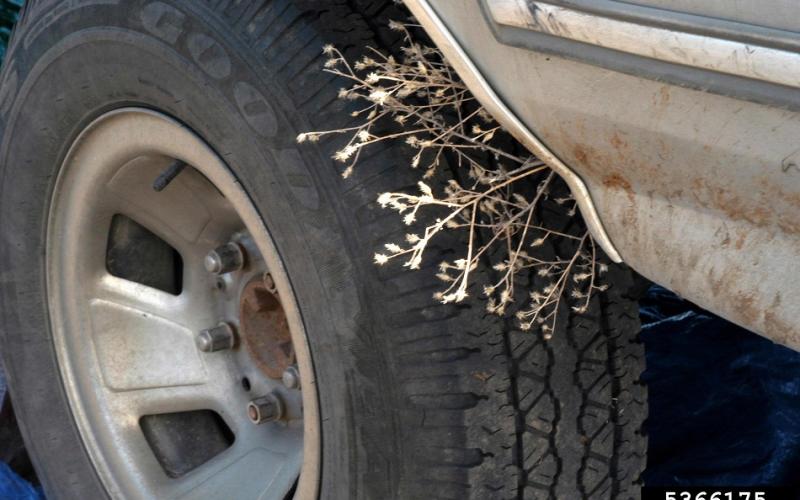 Dried diffuse knapweed plants are lightweight and can be moved by vehicles.
 -
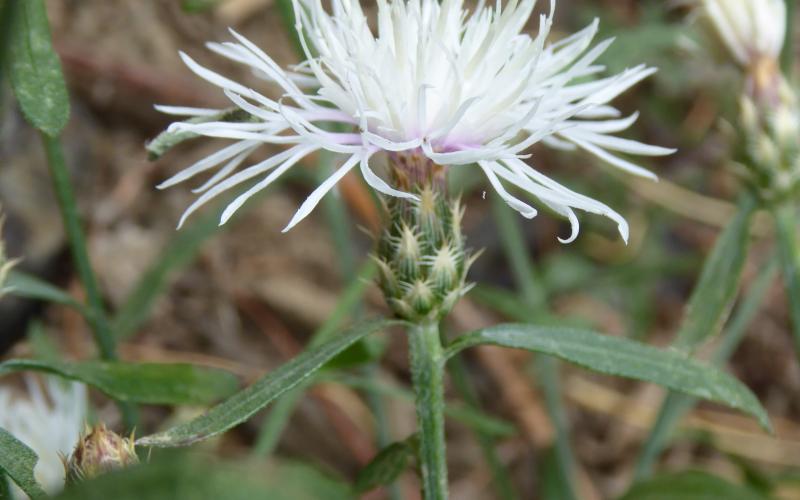 Bracts are leathery and veined and have small, rigid spines.
 -
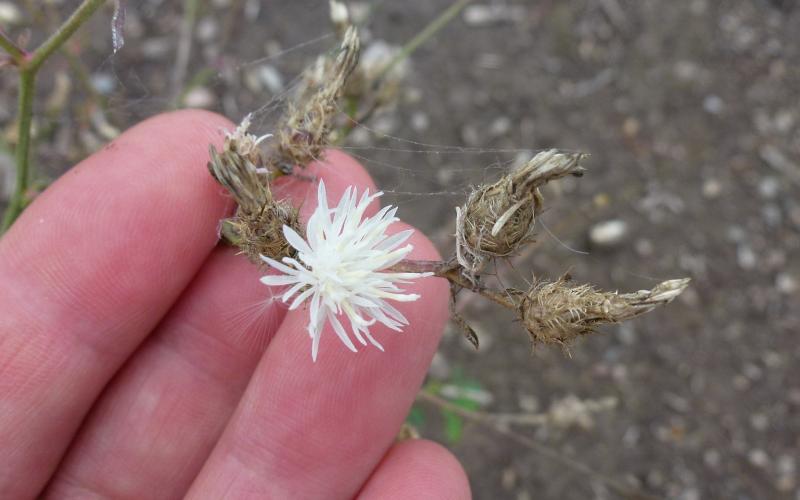 Flowers are very small and color ranges from white to purple.
 -
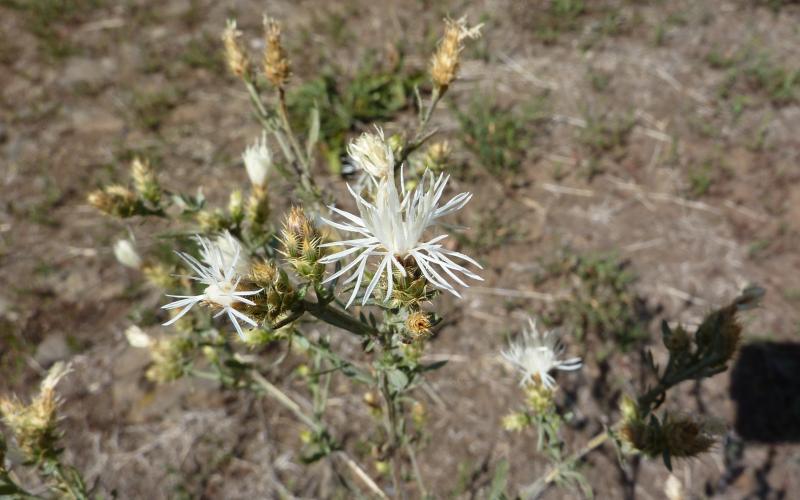 Plant can flower in clusters at the ends of the stems.
 -
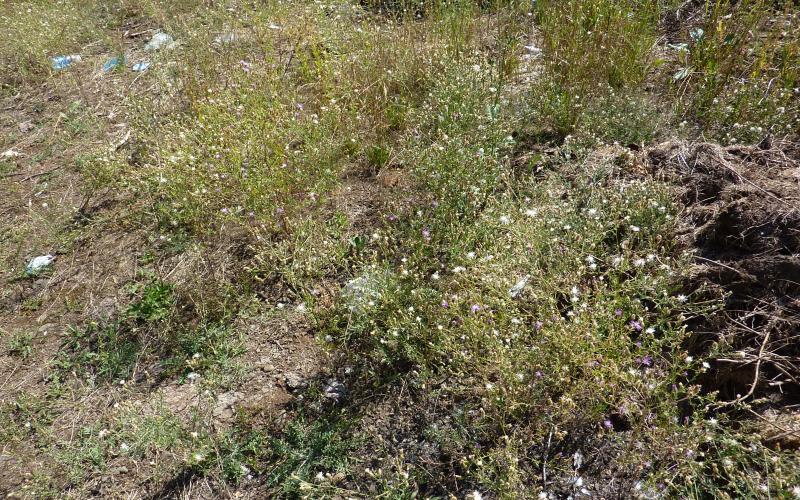 An infestation in a vacant lot.
 -
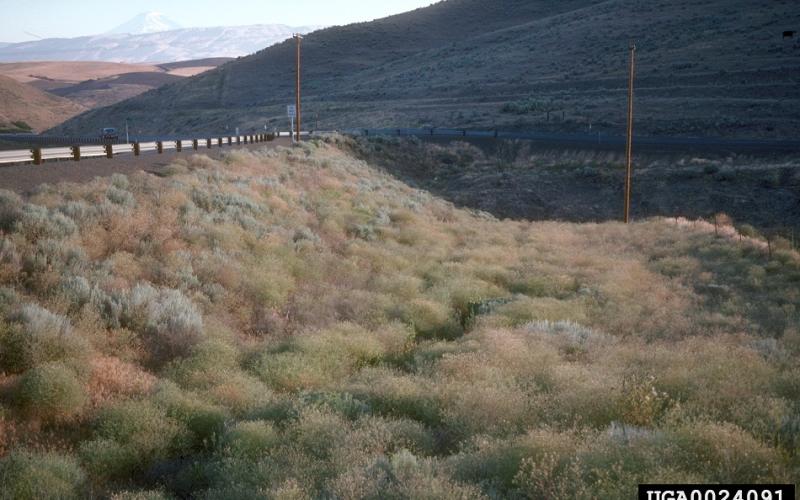 Diffuse knapweed suppresses native vegetation.
 -
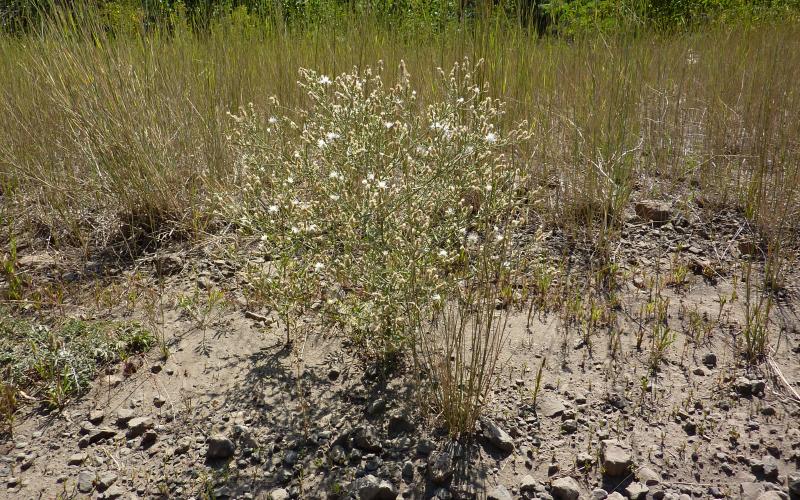 Diffuse knapweed tolerates gravelly soils and drought.
 -
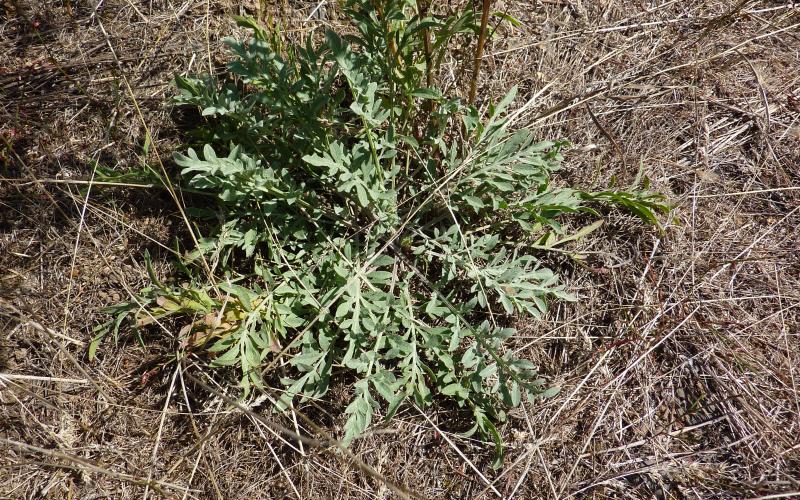 Basal leaves are highly divided into long, narrow lobes.
Common Name: Diffuse knapweed
Scientific Name: Centaurea diffusa (Lam.)
Legal Status
All above and below ground parts of the plant must be destroyed. Additionally, no transportation, propagation, or sale of this plant is allowed. Failure to comply may result in enforcement action by the county or local municipality.
Background
Diffuse knapweed is native to Europe. It was accidentally introduced to the United States in the 1800s through contaminated seed. An infestation was found in St. Louis County in 2013.
Description
- Diffuse knapweed is a biennial or short-lived perennial in the sunflower family (Asteraceae). It forms a basal rosette in its first year. At maturity, it is generally shorter than other knapweed species, reaching 1to 3 feet tall.
- Leaves are covered with short, dense hairs, giving the plant a grayish tint. Basal leaves grow on short stalks and are highly divided into long, narrow lobes. Leaves become smaller up the stem. Upper leaves are small, sessile, and not lobed.
- Flowers are 4 millimeters in diameter and 9 millimeters long. They are usually white but may be pink or purple. Flower heads are urn-shaped and may be solitary or clustered at the end of the branches.
- Bracts at the base of flower heads are leathery, veined, and studded with small, rigid spines with one longer spine at the tip.
- Fruit are very small, dark brown seeds, usually lacking a pappus.
- Plants have taproots.
Habitat
Diffuse knapweed thrives in disturbed habitats such as roadsides, railroad tracks, gravel pits, vacant lots, and heavily grazed pastures. It tolerates drought, traffic, disturbance, and thin or gravelly soils.
Means of spread and distribution
Diffuse knapweed reproduces primarily by seed and is a prolific seed producer. After flowering, dried plants may break off at the base of the stem and blow about like a tumbleweed, dispersing seed over long distances.
This knapweed is widespread in rangelands of the western United States. In Minnesota, there is only one known infestation in St. Louis County.
Impact
Diffuse knapweed overtakes and suppresses native vegetation, reducing species diversity and wildlife habitat. It can also increase soil erosion.
This plant is allelopathic, meaning it releases chemicals into the soil that inhibit the growth of other plants. Diffuse knapweed can also cause crop loss and reduce forage for livestock. Spines on the flower heads can injure the mouths and digestive tracts of livestock.
Prevention and management
- Once established, diffuse knapweed is difficult to control. For all management options, infestations must be monitored and treated repeatedly until the seedbanks are depleted.
- Do not plant knapweeds. Limit any further spread of existing plants by cleaning animals, vehicles, and equipment before leaving an infested area. Use only certified weed-free seed, forage and straw.
- Small infestations can be controlled manually by digging and removing root crowns or by cultivation. Always bag or incinerate flower heads after removal.
- Large infestations can be controlled with either foliar or cut-stem herbicide applications. For specific herbicide recommendations, contact your University of Minnesota Regional Extension Educator.
- Several biological control agents are approved for diffuse knapweed, but biological control is not acceptable for species on the eradicate list.

